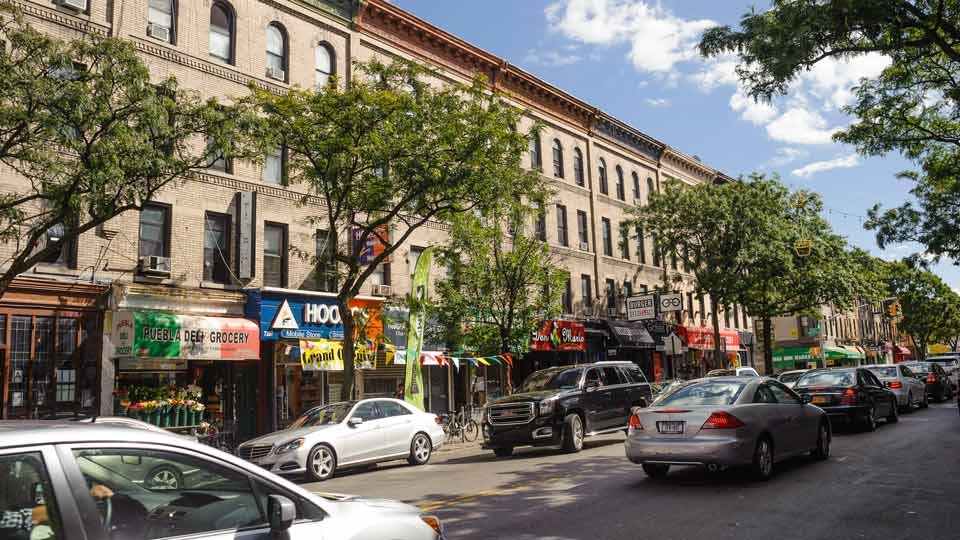
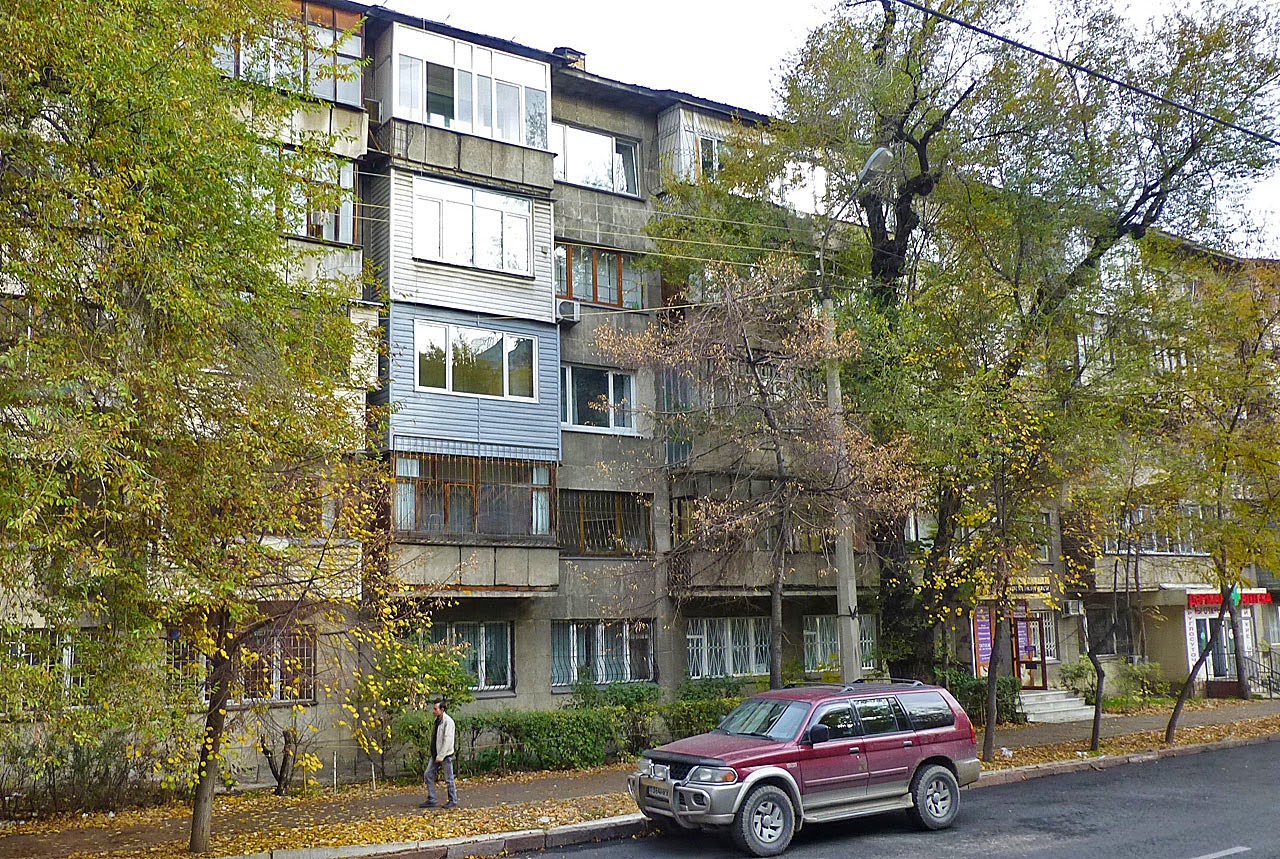
The best urban environments I've lived in so far are the ones in the ex-USSR. They had moderate amount of street retail, not too much, but were very walkable. Today, in the area around me they began retrofitting the lowest levels of the condo buildings with cafeterias and such and it is becoming too busy, too messy and uncomfortable the people who lives in these buildings. Generally, what you need is not a retail in every building, but smaller size stand-alone stores and strip malls, in bigger numbers. Also, American condo buildings rarely have separation lawns between the street and buildings themselves, sidewalks are extremely narrow and not asphalted (asphalt is much nicer to walk on and prevents the grass shoots from poking through the pavement), the whole city blocks layouts are bad (no courtyards, playgrounds inside, all have traffic going through them - unsafe for children).
TL,DR: If you want to get a nice, family friendly, comfortable urban environments -check the former USSR and the other Eastern Block countries.
> The best urban environments I've lived in so far are the ones in the ex-USSR
You might want to read more about Microdistricts (https://en.wikipedia.org/wiki/Microdistrict), if you haven't already, as a resident of one of those former communist Eastern-European cities I can attest to their usefulness. For example, until a couple of years ago I used to live in one of those apartment buildings that used to be part of a microdistrict (building was built in the 1960s), and I can tell you that I had an elementary school right bellow my window (I was living on the 7th floor) and a kindergarten 50 meters from the building's entrance. Don't have kids, but if I had one at the time he/she could have gone to kindergarten or school in record time (the elevator-ride would have probably taken longer than the actual walking, it was an old elevator), so no need for me, the parent, to need to leave work earlier in order to pick my kid up from school or kindergarden (or to hire someone else to do it). The tram station was also pretty close, like 50 meters or so.
But, yeah, a microdistrict requires that you live in a not-so-big apartment (not-so-big compared to owning an actual house) so if you're the sort of person that usually buys and accumulates lots of stuff then it's not for you, because you'd have no place to deposit said stuff. I guess that's why it kind of worked in the former Communist countries and why it's so difficult to impose in places like America.
I'd rather say if you want that, visit new (post car-fetish era) developments in central and western Europe, like in many German towns. Essentially any German town I've been to is better than most of the Eastern Europe I know.
While Eastern block estates were built mostly without cars in mind, they were also rushed, low quality buildings, without enough retail or comunal spaces, built in space won by razing old buildings or whole neighborhoods, without regard for the history. Especially in the 70's and later the quality of planning and execution went rapidly downhill, leading to problematic estates like Jizni Mesto or Petrzalka.
Never been to Western Europe, but although Eastern European building probably look dull, but they are not low quality, at least not compared to what they built in the US; you need also to keep in mind that the Eastern Block was poorer. I do not think there is not enough communal spaces in general, but there are problematic areas, true, but in observation, all the problems in urban development started appearing mostly after the fall of the USSR. Today they are building up with little regard for proper urban planning.
I have lived in a few 'plattenbau' and other Eastern European buildings through the years. Some of them, mostly from the 50's, are high quality by any standards. Anything newer is lacking at least in some respect (sound isolation being a very acute problem mostly, but also other issues). In the more affluent EE countries, owners invest into upgrades, but some things cannot be improved easily or at all.
I have also lived in London and building quality of older/cheaper housing stock there was shockingly low compared to EE estates. Germany is much better.
>TL,DR: If you want to get a nice, family friendly, comfortable urban environments -check the former USSR and the other Eastern Block countries.
I was in St. Petersburg, Russia a decade ago, and the parts of the city I saw that were built in the Soviet era looked anything but friendly and comfortable.
They might have looked dull, but not duller than any American city, esp. built in 20th century. Besides, the whole point is not the looks, but the layouts are nice. Still, currently living in a large Soviet city, and to me it is much nicer than Philly or NYC.
>They might have looked dull, but not duller than any American city, esp. built in 20th century. Besides, the whole point is not the looks, but the layouts are nice. Still, currently living in a large Soviet city, and to me it is much nicer than Philly or NYC.
The only comparable places I've seen in the US, in terms of sheer ugliness, are large high-rise government housing projects.
I will say this about St. Petersburg, in all sincerity: The woman (35 yrs and under) there seemed to be, on average, notably more attractive than in any other place I've been, before or since.
You should just confine yourself to whatever built before 70-s.
After that you have huge cities' outskirts packed with 9 to 17 storey apartment buildings with some greens between them, but no other amenities. Everything is far apart and (these days) packed with cars. There's public transport but roads are wide and far between, so going to bus stop is painful. A lot of cold winds too.
More central districts with ~5 story buildings are ok. Guess what, they're going to bulldoze those in Moscow, replace with aforementioned.
Not sure about the outskirts, but the urban cores are definitely not desolate and with no amenities. But I agree, ex-USSR urban planning is getting worse. Still not bad, compared to NYC.
Most of apartments that late USSR built would rank as "projects" in the USA. Yes there's less crime because their mixed occupants usually have work and life, but they're far from comfortable.
Most of NYC's homes are suburbia or town houses I guess (over tunnel and bridge) which for all of their shortcomings provide much better quality of life.
First of all, the projects often do not look bad, and if you fill them with more or less decent public are nice buildings. Now, speaking of "better quality of life" -- no they do not. I lived in condos in NYC (brooklyn), and they all universally were bad - built in 1920s, made literally from paper, stinky, could hear my neighbors, required constant maintenance, had no public areas to speak of. Soviet condo buildings may be dull on outside, but they require almost zero maintenance. My building is built in 1965 and it is still like new - no mold, no stink, no cracks. American plywood condos do not last even 25 years without starting looking rundown. Besides, I have nice playground nearby, beautiful greenery, a small park across the street.
I guess you were lucky. 1965 was a top year for USSR after all. I used to live in the flat like that in Moscow, everything you listed was there, but it was kinda frustrating there was nowhere to buy fresh bread or eat out in the walking distance. I may sound grumpy at that, I guess. You could walk 25 minutes for a mall with multiplex.
Now I'm living in apartment in historic Saint Petersburg borough, and that makes for a huge difference. I have maybe 20 bars & restaurants in the walking distance! A few farmers' shops too. I can walk to three different cinemas and a theatre! I live next door to an university!
So I think that european-style urban cores should continue to be The Thing.



TL,DR: If you want to get a nice, family friendly, comfortable urban environments -check the former USSR and the other Eastern Block countries.