I live on a Pacific island. I've been considering buying a house (instead of renting), but if I think about a timescale of more than 20 years, it seems like a poor investment, considering that it may be very uncomfortable to live here by then. Considering the climate changes, but also social and economic factors, where would you move, or where would you avoid (e.g. how I am considering avoiding living here long term)?
This is something I have been putting a lot of thought into lately. My wife and I have been fortunate to have lived in France, England and Spain over the past decade, as well as being regular visitors (+6x/year) to the United States.
The more places I see, the more I realize that the area of the world I grew up in, the interior of British Columbia, Canada or where my wife grew up in Alberta, Canada, are both better suited to handle the projected long-term adverse climate changes than anywhere else I've ever been.
With the use of greenhouses, their easy access to abundant fresh water and readily accessible energy I think they're both well-suited areas to long-term stability.
In general, temperate regions of the world are boring, but safe, and really good places for humans to live. That's why I love New England; there's lots of fresh water, there's no significant tectonic activity, you might catch the remnants of a hurricane once a decade. There are nearly no poisonous animals.
It snows a little bit, that's about the worst you can say.
In summer they have the worst gnats/biting flies/bugs I have ever encountered in my life. Very slow-moving and easy to kill, they arrive by the millions intent upon crawling into your socks, underwear, collar and hair, injecting an anticoagulant and lapping up your blood. Each bite (and you will have thousands of them) leaves a red circle of material beneath your skin (~1/4 cm in diameter) that takes years to go away.
I was unlucky enough to be working one summer in northern Maine when these black devils began drifting into town. We swatted and laughed at first but after an hour we had to quit to get repellant to apply _everywhere_. Decades later the scars are still present on my ankles.
I think it's important to note that the proper term is climate change.
It's not just warming. It's rising sea levels. And where I live (in land, northern hemisphere), we're seeing increased flooding due to higher rain fall.
Winters aren't necessarily colder, but the growing season for crops is consistently out-of-whack and has ruined multiple crops over the year.
In-land, near lakes in the northern hemisphere may be hot less drastically, but everywhere is being affected.
Grain yields in the US have on average increased every year since 1930. Global warming is a real issue, but to say that farming is currently being effected is not supported by much emperical evidence. https://www.agry.purdue.edu/ext/corn/news/timeless/yieldtren...
Grain yields have increased thanks for pesticides, herbicides, selective breeding and mass agriculture improvements. And the misuse of said herbicides as dessicants (eg. Roundup).
I don't know how hardy grain is specifically, but I was remembering the issue with apples in Ontario:
Yeah, the winters are still cold, but the weather is seriously unpredictable and it feels like the seasons have gone out of sync lately. It's definitely going to affect crops in the long run, and I suspect the effects are going to become a bit more apparent (rising costs of food in developed countries) in the next 10-15 years.
So, to answer the original question: Go somewhere you will still be able to grow/breed food reliably in 20 years, and where the local community is strong enough to support such production in the long run. Make sure you are able to contribute and participate to that community if/when the shit hits the fan.
Climate refugees are going to be the big issue, not where to choose to move if you have that freedom. Any question of where to go has to somehow answer "What happens when everyone else who can tries to go there?"
Can you really keep out tens of millions of people with a wall? Absolutely, if you're willing to enforce it. You may have to kill some of those people to do so, though. Which puts us right back at your second paragraph.
Europe and the US kept hundreds of thousands of Jewish refugees out of their countries during the Holocaust. We certainly can do it again, with just as shameful results.
I'd move somewhere where the government and people actively care about climate change and don't just say "it's someone else's problem" or "nothing I can do as an individual will make a difference" or "you first!"
IMHO countries like Finland, Norway, Sweden. They are pretty hilly countries with a lot of natural resources and they are actively working for being as much environmentally friendly as it is possible for a country.
Unfortunately money rules this world so it's a good tactic to start paying taxes in place where government cares about environment. Hopefully at some point other countries will realize that investing in ecology is actually profitable.
India: That and possibly in future being jailed for holding crypto, a human rights violation IMO. People should be free to trade in general without government interference except when it causes harm to other people.
Avoid the mediterranean.
Old IPCC models "predicted" tornados in the mediterranean - there are very brief tornados (google for cap de fiblo) every now and then near Minorca island (I saw 2 myself).
Very similar to my thoughts. I'm also considering the possibility to defend myself. This may be provided by the "not too densely populated" one (but things are supposed to change in that respect in case of the big trouble).
So potentially an elevated, or hidden place?
I've wondered about the likelihood of needing to defend myself, but since I'm completely incompetent in that regard, I'll have to opt for security by obfuscation.
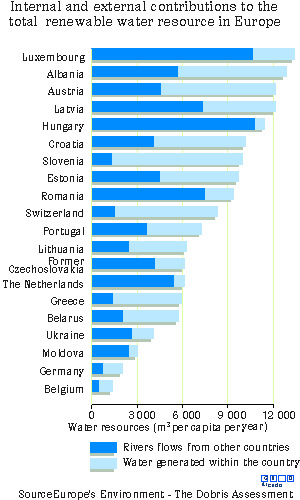
In my musings, the two things that most worry me is an acute shortage of fresh water, and that any hospitable place I choose is also going to attract hordes of other climate refugees that will outcompete me. There are places like the Pacific North West of the US that are likely to fare relatively well in the Climate Wars. Yet these regions will also attract climate refugees from elsewhere in the country. Canada has a lot more amenable landmass to work with, and relatively fewer people to compete with. Ironically, Canada's acceptance of refugees with open arms gives me pause, since it suggests a likely destination for global climate refugees (ghastly of me, I know). In that respect, NZ's geographical isolation and sparse population strike me as huge pluses.


The more places I see, the more I realize that the area of the world I grew up in, the interior of British Columbia, Canada or where my wife grew up in Alberta, Canada, are both better suited to handle the projected long-term adverse climate changes than anywhere else I've ever been.
With the use of greenhouses, their easy access to abundant fresh water and readily accessible energy I think they're both well-suited areas to long-term stability.