It's worth noting that the record here extends back 32 years, to 1989. And that the weather station isn't equipped with rain guages, as those were seen as not useful.
The story also mentions that the liquid precipitation should form a distinctive ice layer which will be preserved in the snowpack, and detecatable in future ice cores.
For those curious about any previous liquid precipitation events, that ice record might give some indication of when those might have occurred. According to the article, "ice core data shows that the last time melting occurred at the ice cap top dates to the 1880s." Which suggests not within at least 130-ish years.
This is a reminder that the duration of direct observations of meterological conditions is limited in both time and geography. Similarly for satellite observations: very comprehensive in territorial coverage, but beginning only in the 1960s and making great strides in each decade since.
Paleometerological records are limited in location to places where weather events can be reliably recorded, and often it's only a specific set of characteristics which are (ice cores, pollen samples, isotopic characteristics, etc.). But they do provide a view across a broad span of time.
Both temporal and spatial aspects have enormous significance.
Yesterday I noticed that on July 2nd someone left a review for a movie that said in part "They did have to put in Climate change nonsense. Wonder if that is a requirement with funding so AL gore can get billions of more tax dollars. 1168 people found this helpful."
It is incredible to me that climate change is still considered to be nonsense by so many people.
I used to assume that people, on the whole, were rational and reasonable. I now understand that most people can maintain rationality only for the domains in which they have first-hand experience or education, and otherwise will resort to hearsay, fantastical speculations, conspiratorial thinking, and propaganda of all sorts. It is becoming ever more clear to me that the potential genius of a representative system of government is the chance for citizens to put their trust into informed and reasoned individuals to make decisions in their name. We should elect reasoned people, and review their record, not day to day, but bi-yearly, so that our ignorance does not impede their work. Of course, when the representative system has been distorted as it has, we do not trust or respect our representatives.
When you consider people denying the existence of Covid while being in the hospital ICU with it, it is not surprizing. The saddest thing about last few years is finding out easy and effective propaganda is.
> It is incredible to me that climate change is still considered to be nonsense by so many people.
Most will take that denial to their graves. For some, many even, it's part of their cultural identity to reject all indication that their lifestyle isn't the flat-out awesomest and most moral way to live in the whole history of humankind.
I blame alarmists like Al Gore. When people don't understand the science they only go by the public claims. Al Gore's movie made claims that failed to happen. It might be that he just got the time scale wrong but he lost the trust of the public.
Climate science uses very hard to understand models it's out of reach of the lay person. So they have to trust the experts. Their only access to the experts is via the media. The current media is untrustworthy as they exaggerate to increase interest and gain click / views. Look at the impact this is having on politics in the US. Left and Right media are telling very different stories with the truth often somewhere in the middle. The resulting fracture is causing huge division.
> It is incredible to me that climate change is still considered to be nonsense by so many people.
No need to be incredulous. Any issue that is politicized by default will cause polarization of beliefs on the subject. If you haven't realized this by now, take a look at covid.
Because climate change is politicized, your political affiliation changes how you view the issue (because your political affiliation affects your trusted sources of information in the world):
Extreme left: "Humanity's only hope for survival is to colonize Mars. Climate change will have apocalyptic consequences for the planet in the very near future, and earth is pretty much doomed. Nothing short of an authoritarian new world government can hope to approach sequestering the amount of carbon we need to reverse the effects."
Far left: "Climate change is THE biggest threat facing humanity. This problem MUST be prioritized at all costs above all other problems, NOW."
Middle left: "Climate change is real, but what can I really do? I already drive a Nissan Leaf and recycle. Our best bet is to transition to renewables/nuclear and hope for technological breakthroughs in the future."
Middle right: "Climate change is probably real, but taking drastic action seems unreasonable considering how long it's taking to see daily life impacted by it. At this rate, society will crumble due to in-fighting before it crumbles due to climate change."
Far right: "Climate change might exist, but the earth's climate has always changed. Just ignore the alarmist/fearmongering liberals, they are always freaking out about stuff that just isn't that deadly for the average person."
Extreme right: "Climate change does not exist. Let's go coal roll some Teslas."
The fact that the right uses probably, might, and not exists is the real problem. When something is an indisputable fact, yet an entire group of people dispute it, that is a cause for alarm.
Nothing in science is indisputable if you have an explanation for all the observations. If we pose restrictions on the set of theories allowed, that they are causal and physical (respects thermodynamics, what we know about the behaviour of gases and their absorption spectra, how light works) certain things become indisputable.
If you presuppose something approximating Newton's laws of motion there is no way you can come to the conclusion that repulsion between bodies (that G has the opposite sign) or that there is (even a vector valued) charge responsible for the attraction.
Claiming climate science is not real at this point is equivalent to either alleging a conspiracy involving at least everyone making temperature measurements or that physics we think we understood fully since atleast the 1900s and that didn't even needed (much) correction for relativity.
Yes, and many of those people are scientists. Skepticism is (or should be) a normal part of the scientific method. Controls and reproducible results need to happen before results can be considered conclusive. I understand that sometimes this is impossible in climate science. Climate change is a fact. Humans being responsible for increasing CO2 levels is a fact. Whether the consequences of raising CO2 levels will be more detrimental than beneficial is yet to be seen. There is little that the western world can do to slow CO2 emission growth. Raising taxes doesn't accomplish much.
Even setting aside warming affects of CO2, it’s well-understood that increasing atmospheric carbon leads to ocean acidification which is much more inarguably a massive net negative.
Perhaps, but perhaps not. In the history of the Earth, CO2 levels have been significantly higher for a much longer time. (See here: https://earth.org/data_visualization/a-brief-history-of-co2/ and note that the time-line is on a log scale.)
Worst-case projections show that at our present CO2 growth rate, things will get bad rather quickly, but keep in mind that the Earth's climate cycles have many (not well understood) self-regulation systems. Increased atmospheric CO2 may lead to explosive vegetation growth which may lead to increased carbon sequestration.
CO2 has historically been higher, but life on earth, and ocean life in particular, was completely different that what we have today. The rate of ocean acidification is such that species do not have millennia to evolve to handle increased CO2 levels and are experiencing massive die-offs.
An extremely well-understood effect is that ocean acidification thins the shells of shellfish.
This may seem like a minor effect, but rapidly upsetting the food chain of the ocean seems like an absurdly risky experiment to run on the planet we inhabit.
So obviously the most apocalyptic predictions are wrong. Life on planet earth can and will survive this. My view is life on planet earth can survive most things we're capable of throwing at it, but the question isn't will we sterilize the planet. The questions is will it be a bad time for humans and yeah rapidly changing the composition of the ocean will be bad for humans. How bad I don't know, but pretty clearly bad
Even if all the changes that were happening were entirely natural, there's an argument to be made that we know we do well in the conditions that existed during industrialization, and that we should try to maintain the environment within those bands. If we knew the globe was heading into an ice age naturally, for example, I don't know that I'd be against trying to prevent that. I don't want mass starvation, etc.
Yeah but these levels have never changed so fast without an mass extinction.
Nobody claims it will end life on earth. It might just end life as we know it as a species given we never hunted dinosaurs.
> Increased atmospheric CO2 may lead to explosive vegetation growth which may lead to increased carbon sequestration.
To my understanding this is decently modelled in long term climate simulations. Plants won't save us and the increased absorption rate of plants with higher CO2 levels is well studied in the lab and accounted for.
Note that these are the same simulations that cannot accurately predict future climate based on past/present conditions. At present there is no model in use that can predict current conditions from past data. It's shameful that government policy makers are relying on this junk.
Perhaps not? You clearly are not well versed on climate change. To take something that is already happening and is very bad: massive yearly wildfires in California. I grew up in Washington, and NEVER had a “smoky summer”. Now it’s a yearly occurrence. It’s at best naive and at worse actively evil to be promoting this “oh it might actually be fine” narrative
> Whether the consequences of raising CO2 levels will be more detrimental than beneficial is yet to be seen.
Yet, propose something like a $50B government program for renewable energy, and these same people will be up in arms, totally confident in their prediction that it will lead to corruption, unemployment, suffering of the poor, and end of personal freedom.
skepticism is now wrongthink. either you believe what you're told (even if it contradicts what you were told yesterday), or you're a "conspiracy theorist." healthy skepticism is no longer considered a virtue in popular culture, it's either join the consensus or shut the fuck up. pretty sad state of affairs.
I mean on some level i agree with you, but since skepticism about climate change is likely leading to a massive humanitarian crisis it’s pretty reasonable for people to be angry at those who say “well actually according to MY research…” when there is such an overwhelming body of evidence pointing to disastrous climate change consequences.
You're exaggerating. Skepticism is is a multi dimensional spectrum. Certain flavors of "skepticism" have been abused and, well, society has shifted its trust accordingly.
Don't confuse intellectual contrarianism with true skepticism. a lot of people claiming to be engaged in the later are really just adherents to the former.
A true skeptic applies that skepticism as equally to their own beliefs and to frings beliefs as they do to popular or widely accepted beliefs.
is there any difference between "intellectual contrarianism" and "true skepticism" aside from whether or not you agree with the conclusions being reached (or perhaps the questions being asked)?
The difference is intellectual honesty. If you're truly willing to consider the evidence, and not just seek out things to reinforce your pre-existing conclusion, then you can be skeptical. Otherwise you're just contrarian.
The problem is that if somebody is dishonest, there's no way to convince them that they're being dishonest. Either they know it, and refuse to admit it, or they're so dishonest that they've completely lost track of what it means to objectively evaluate evidence.
So it's the kind of thing that experts in the domain will all be able to discern, while those same experts will be thought of as conspirators by the contrarian (and reinforced by their equally non-expert circle of trusted acquaintances). About the only hope you have at that point is noticing when the conspiracy is so large that it's simply not reasonable to expect it to persist. But since they get reinforcement from their large circle of non-experts, they usually conclude that the same logic applies both ways.
Yes, absolutely. I already explained what that difference is but let me go further since you didn't understand:
If you only apply your skepticism to polular narratives but not to your pet theories, then you are not truely a skeptic.
It doesn't matter what you believe, it just matters that you approach what you believe with an equal or higher level of skepticism than you approach what others believe.
I, too, am skeptical that the sky is blue, space is black, and that the planets orbit the sun. I mean, I haven't directly observed space or the planets, so the scientific approach is to be skeptical. I also hold out some tiny hope that electrons aren't real and microprocessors are powered by multi-dimensional hamsters.
It is denialism--really, it's willful, militant ignorance--at this point to go against the consensus on climate change. It's just being obtuse.
All I can say is, buckle the F up, because the effects of climate change are compounding year by year and decade by decade. I am so confident in this, after reading tons on the subject, having been all over the world and seen it, that I'll just leave it there.
Greenland has so few people, yet so much land. I get that this is on account of the temperatures, but would it be possible to build large cities there if there were demand? Or are the geography and natural resources insufficient to support cities of scale?
If you're talking about building on the ice sheet, building on ice is very difficult, the snow is constantly drifting and requires a lot of maintenance (lifting or moving buildings every few years, etc.). And only the 109th national guard operates ski-equipped C-130's that can bring supplies. Smaller planes can come (Baslers or Twin Otters) but those can't carry nearly as much. They used to have a traverse from the air force base at Thule but they stopped due to difficulty getting on the ice sheet from there.
On the coast it would be more reasonable to build a city, though the topography is rough and getting enough food would be expensive. The only place I've been on the coast is Kangerlussuaq (the main commercial airport for Greenland, and also a base for the 109th ANG which is how I got to Greenland and to Summit). You can explore on street view what it looks like: https://www.google.com/maps/@67.0035567,-50.6859212,3a,75y,3... . It actually has the largest road network in Greenland and a seaport. But... there isn't that much room to build if you wanted to and I think that's more or less the story everywhere in Greenland. For example, ere is Nuuk, the capital and largest city: https://www.google.com/maps/@64.1770542,-51.7239805,3a,75y,4...
I mean, it's 98% ice, miles of it. It's certainly possible for people to live on ice if there's demand and energy, but there are a lot of other open areas of the earth for people to build cities on.
This year has seen both a high melt [1] as well as a high accumulation [2] of snow, the balance of which currently lies clearly at the positive end - Greenland has far more accumulated snow than average. These images come from the Danish polar portal [3] which I assume to be a canonical source given that Greenland is a Danish province.
The explanation with the images reads as follows:
The map illustrates what the ice sheet’s total surface gains and losses have been over the year since 1 September compared to the period 1981-2010. It does not include the mass that is lost when glaciers calve off icebergs and melt as they come into contact with warm seawater.
The animation shows one frame every seven days going back to the previous 1 September.
The blue curve shows the current season, whilst the red curve shows the corresponding development for the 2011-12 season, when the degree of melting was record high.
The dark grey curve traces the mean value from the period 1981-2010.
The light grey band shows differences from year to year. For any calendar day, the band shows the range over the 30 years (in the period 1981-2010), however with the lowest and highest values for each day omitted.
FYI, there's a school of thought which has concluded that global warming will lead to another glacial period within the current ice age, because higher temperatures disrupt ocean currents -- particularly the Gulf Stream, which redistributes warm water from the Gulf of Mexico to northern Europe. As the Gulf Stream makes its deposits of warm water along the coasts of Great Britain and northwest Europe, it keeps the temperatures in northwest Europe warmer than in eastern Canada, even though they both are roughly the same distance from the equator. The hypothesis is that, if Arctic ice melts as a result of global warming, huge amounts of fresh water will pour into the North Atlantic and slow down the Gulf Stream, cooling Europe, and triggering a feedback loop with colder and longer European winters, and more and more ice building up on the planet's surface.[a][b]
[a] The book "Ice Age" by Cambridge-trained astrophysicist John Gribbin and his wife Mary has a good high-level overview of this school of thought: https://reanimus.com/store/?item=1420
As far as I can tell the slowdown or cessation of the gulf stream will not lead to an "ice age" but to a cooling of north-western Europe. The climate there will be more comparable to that of the southern part of Alaska. While to the inhabitants of this region it may feel like an "ice age" the difference is that in an ice age the global average temperature goes down while this is not the case for the above scenario. It is quite possible - likely, even - for some regions to end up with lower average temperatures while the average global temperature increases.
My understanding is that we're already in an ice age -- specifically, we're in an inter-glacial period of an ice age. What you call the "cooling" of northwest Europe would be a glacial period within this ice age.
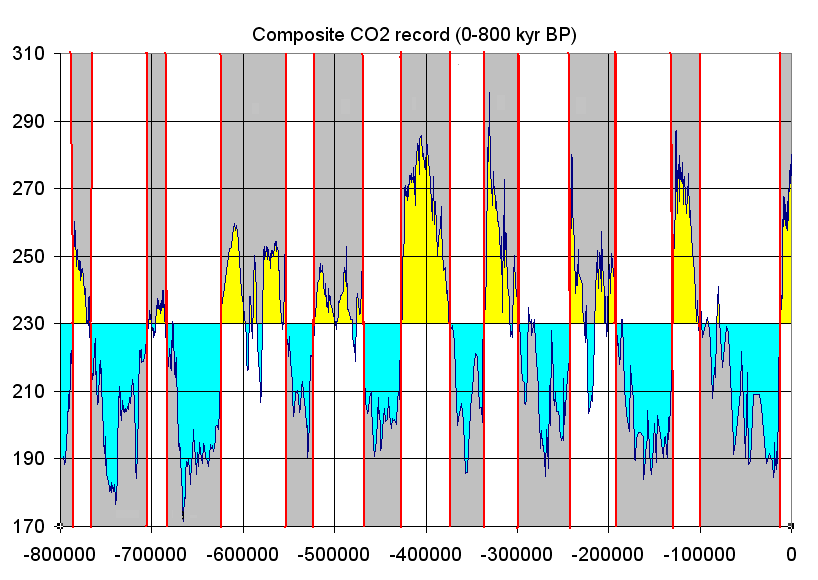
We're in an interglacial, awaiting a new ice age. If history [1] is anything to go by we're at the trailing end of the warmest period of the Holocene epoch [2]. Depending on how this interglacial develops the temperature will either gradually decrease into a new ice age (i.e. follow the same pattern as the Pleistocene) or rebound for a second peak (like the Pliocene, Eocene and Paleocene interglacials). At the end of the Holocene interglacial the ice will return for the remainder of the epoch.
I believe you are using the terminology incorrectly. According to Wikipedia, we currently are in an an ice age that began approximately 2.6 million years ago:
Could be, I interpret "interglacial" literally, as being "between two ice ages". Were we in an actual ice age the same etymology would produce the term "intraglacial", a word I've never seen but that might be because written language was not yet a thing when there were people living in that circumstance.
There is a conflict between the popular and scientific meaning of "ice age" that seems to be tripping the two of you up. If you are going to get into a semantic debate about related meanings, you should clarify the specific meaning you ate intending.
I don't think there is a need for any debate, it is after all clear what we mean: an ice age is the whole cycle (interglacial + glacial), glacial is the period of maximum ice coverage, interglacial is the period of minimum ice coverage. In the common vernacular "ice age" equals the glacial period.
Are there any climatologists who have written about Gribbin's Ice Age idea? Not that I think he's necessarily wrong, but I am a little extra skeptical when an expert in an adjacent area of research is positioned as a contrarian to the mainstream of another field. For whatever reason (overconfidence? credentialism? inexperience?) this always seems to produce sketchy science.
I think there is a reluctance to discuss this, given the politicisation of the entire problem, and inevitable confusion. But note that global warming did get changed to "climate change" a decade or so back. Unfortunately this particular aspect gets very geopolitical, very fast, on any contemplation about which regions benefit from the two states. The ice core record itself is very clear, we´re towards the end of an interglacial period of the dominant 100k year ice age cycle, caused by small cyclic differences in the earths position vis a vis the sun over that period.
As to what happens next, the generally accepted theory at the moment is that the rise in CO2 combined with differences in the orbital inclination this cycle make an ice age onset unlikely. However know enough to read between the lines, the known unknowns if you like, and it's clear we don't know nearly enough about what actually causes glacial onset, or why it appears to happen so quickly. One could also go a bit further and comment that all interglacials seem to have a pattern of increasing CO2 (although not nearly to the extent we have triggered), until an abrupt drop. The Ocean Circulation theory originated out of the Wood´s Hole Research Lab a few years back.
The wiki page is good, and has the relevant papers linked:
> a little extra skeptical when an expert in an adjacent area of research is positioned as a contrarian to the mainstream of another field.
Thanks for putting words to something I've always noticed.
I think it comes from overconfidence borne of expertise in one or a few other fields. A pop culture example would be Elon Musk thinking he understands virology and epidemiology because he knows a lot about rockets, computers, and other non-living engineering systems.
> This year has seen both a high melt as well as a high accumulation of snow, the balance of which currently lies clearly at the positive end - Greenland has far more accumulated snow than average.
Seems to apply for the whole northern hemisphere.
Look at the diagrams for 'the current Northern Hemisphere snow water equivalent relative to the long-term mean and variability' (GCW/FMI SWE Tracker) at https://globalcryospherewatch.org/state_of_cryo/snow/
> In fact, temperatures at the site only rose above freezing three times before this in the past 32 years, according to observations at Summit Station from 1989.
These were the years of the most recent melts. It doesn't say there was rainfall.
> Earlier melt events in the instrumental record occurred in 1995, 2012, and 2019; prior to those events, melting is inferred from ice cores to have been absent since an event in the late 1800s.
doesn't that make "first time on record" a stretch too far?



The story also mentions that the liquid precipitation should form a distinctive ice layer which will be preserved in the snowpack, and detecatable in future ice cores.
For those curious about any previous liquid precipitation events, that ice record might give some indication of when those might have occurred. According to the article, "ice core data shows that the last time melting occurred at the ice cap top dates to the 1880s." Which suggests not within at least 130-ish years.
This is a reminder that the duration of direct observations of meterological conditions is limited in both time and geography. Similarly for satellite observations: very comprehensive in territorial coverage, but beginning only in the 1960s and making great strides in each decade since.
Paleometerological records are limited in location to places where weather events can be reliably recorded, and often it's only a specific set of characteristics which are (ice cores, pollen samples, isotopic characteristics, etc.). But they do provide a view across a broad span of time.
Both temporal and spatial aspects have enormous significance.