We didn't even have more than one debate this election cycle going over economic policy. I was big Ron Paul fan on foreign relations, but whenever he went into economics you could see his views were just a little nuts. Practical fiscal conservatives were asleep at the wheel on this one.
For those that went through Brexit, can you detail when the larger population realized it was stupid? That's the only pattern I can see the U.S matching at this point.
The Republicans successfully turned economic issues into social ones. Previously, immigrants were stealing our jobs. Now they're stealing our cats.
The three pillars of the Republican party were conservatism, religion, and race. I'm not saying every R is concerned about all 3 of these, but that they couldn't win elections without all 3 of them. Over the past 50 years, traditional conservatism has been hard pressed to explain itself to the working class in light of the rising prosperity of liberal democracies, and has become further detached from reality. People are becoming less religious, and more racially diverse. I think the R's realized that they were running out of runway, and also figured out how to exploit nearly 100% dominance over the "new" media.
Not to mention a _huge_ [1][2] increase in wealth inequality over the past 30 years as well.
Instead of progressive taxes and taxing the rich more, you end up instead with tax _breaks_ for the richest and regressive taxes instead (tariffs, which are effectively a national sales tax).
I guess the current tactic is to distract people with "those terrible immigrants are at fault" and DOGE and constant policy changes.
The usual HN response to wealth inequality is "why do you care how much they have?" The answer is, of course, that money is power and the power that many of the wealthy are exercising is not to the benefit of most people.
You don't even need to think about money as power, you can just think about money as money. There's a far simpler way to think about wealth inequality. If you believe it's a problem, by definition the people holding the wealth are the cause of the problem. This isn't some social or philosophical construct - it's just basic deduction.
So quite literally, the wealthy holding the money means less money to go around to everyone else. The more they hold themselves, the more is withheld from everyone else. You can have debates about wealth distribution endlessly because it's subjective and complicated, but you can't argue that the wealthy getting richer is good for anyone except the wealthy. Trickle-down-economics has already been established as propaganda at this point.
I understand that wealth is not static in the world and it's possible to create wealth for everyone, but my point is money hoarding is definitionally the cause of wealth inequality.
If the wealthy held their wealth in money then there would be no problem. The problem arises because the wealthy hold their wealth in assets, the most productive of which become hoarded in fewer and fewer silos. Since the assets are desireable and increasing in scarcity their asking price increases. Since this price is paid in money, the value of money falls. This would be fine except that most normal people do hold most of their wealth in money so this reduction in buying power makes them poorer.
This split is particularly difficult to address because money is easy to tax (redistribute) while assets that may or may not be for sale at some arbitrary asking price are a lot harder to break up in this way.
Ultimately, to attempt to extract and redistribute this sort of ethereal wealth requires unpopular adjustments to long-held values of personal freedom and ownership that make the whole system possible in the first place.
The problem may in fact be insoluble sustainably. Most of human history provides examples of extreme wealth inequality.
I get what you say -- hoarded wealth is essentially idle. But I think there's more to it. The people who hold that wealth prefer to live in one country, and have inflicted themselves on the governance of that country.
> I get what you say -- hoarded wealth is essentially idle.
I'm not talking at all about wealth being idle in my previous comment. My point is entirely that the more money the rich have, the less money the poor have.
What you're bringing up is how the wealthy use their money to change their political environment to benefit themselves. This is also a problem, but is parallel to the point I was making.
You are replying to every single comment - you seem really upset about this. I never said anything was stolen from me. I said wealth inequality is the result of rich people holding money, because by definition there can be no wealth inequality without rich people. It's an objective statement and you're projecting so much political vitriol onto it.
> That doesn't all mean they are "holding" money. Money is not the same thing as wealth. Personally, I don't have any money other than pocket change.
I'm using money and wealth interchangeably here because there is no meaningful distinction in this context. I cannot take you seriously when you keep bringing up irrelevant things. It's obvious you don't understand my point. And I've had enough arguments with you on this site over the years to know it's a waste of my time to engage with you more than I already have.
It would be absurd to expect to change anyone's core beliefs with a couple of HN posts.
I'm satisfied just letting you know there is a case for free markets. I also admit that it is not an easy thing to understand. How can a chaotic system possibly work?
For a given definition, it doesn't. At least, not without vastly understating the gov's role (some might say responsibility) to step in and monopoly bust, regulate strategically important sectors of the economy, and generally try to provide human-scale stability to a system that tends to want to burn itself and polite society down more than a caffeinated toddler with an outlet, a fork, and a dream.
That's debatable. The US economy grew spectacularly in its first century, pulling scores of millions of poor people up into the middle class and beyond.
Regulation along the lines of enforcing contracts, protecting rights, and internalizing exernalities are the proper role of government.
Governments have never managed to make economies stable.
Anything's debatable. The question is whether or not what you've chosen to defend is more or less substantial than a wet fart in a hurricane.
Pre-industrial growth that was driven largely by settler colonialism does not make for a useful economic model since we're unlikely to find any new continents any time soon. To say nothing of the horrors inflicted on native populations, but I suspect that's not a group you'd be too sympathetic towards.
I would recommend you stop confusing your own willful ignorance with lack of evidence. You could take a cursory look at the wikipedia page on Australia's response to the GFC as a case study in government doing it's actual job, instead of this fantasy of auto-regulation via free market competition. You can have a bit of both and reap outsized benefits as has been the case for every great to super power sunce the dissolution of the USSR.
> It would be absurd to expect to change anyone's core beliefs with a couple of HN posts.
I 100% agree.
> I'm satisfied just letting you know there is a case for free markets.
I'm a believer in free markets. You just cannot stop projecting assumptions onto me. I've clarified my point multiple times already so I'm not going to bother repeating myself again. I think we can both agree it's okay to be misunderstood by people on the internet.
> "I'm satisfied just letting you know there is a case for free markets."
There's no such thing as "free markets", it's A. Smith's BS.
> "I also admit that it is not an easy thing to understand. How can a chaotic system possibly work?"
A chaotic system cannot work for any meaningful stretch of time. Moreover, we don't have a chaotic system, actually it's a system under finely tuned control: Biden placed 100% tariff on Chinese EVs, helping Tesla. Trump added more tariffs on China, exempted Tesla... Truly a chaotic coincidence /s
> the wealthy holding the money means less money to go around to everyone else
Wealthy entrepreneuers created their wealth, it was not transferred to them. It does not reduce the amount of money elsewhere.
The wealthy do not "hoard" wealth, either. They invest it. All of it. Even checking accounts are not hoarded wealth, because the money you put in it is loaned out by the bank (less the reserve requirements).
This is largely debatable and hard to measure. The thing about creation is that it's not black or white, it's gray.
Everything relies on thousands of other things. Products and services are huge graphs that nobody truly understands and that span hundreds of years. How much is created, and how much is reused? Hard to say.
At least some of the money is taken via exploitation. For example, if you opt to outsource product X to some third-world country and you drop labor cost 10%, and that in turn grows your company, you did not "create" that growth. You systematically stole it.
Another example we see a lot today is cutting quality. A lot of goods today are produced more efficiently, but not as much as you may think, because some of the productivity gains is simply pseudo-monopolies using their market dominance to cut quality without recourse. It's just human nature that we can't perceive a, say, 1% cut in quality. But if you cut 1% every year for half a century, then congratulations, you "created" a bunch of wealth. But you didn't actually create anything.
Choice isn't binary, it's a continuous distribution. There's not "free choice" and then "gun to head".
Work, especially for vulnerable, exploited populations, is not voluntary. Particularly when we talk about pseudo-slavery tactics used on migrant workers or other vulnerable populations.
There's a reason companies will often progressively move down to poorer, more vulnerable populations for their labor. Those people are much easier to exploit. We even see this in the US, to an extent. Tyson recently had a debacle where they threatened their (knowingly undocumented) workers with ICE if they attempted to unionize. To call this "voluntary" is willfully ignorant, at best.
Some items absolutely are zero sum - anything that is in short supply with a high demand becomes unobtainable for anyone who isn't rich.
Some things that are effectively out of reach for at least half of everyone:
  Mansions and Luxury Condos in desirable locations
  Private Jet
  Private Island
  The best quality food
  2021 Ferrari 812 GTS
  The best legal advice
  A favor from a US Senator
These things are effectively zero-sum, only a limited number of people can have them and we can't expand the supply very much (or intentionally don't because that would hurt their exclusivity value).
The wealthy aren't exactly hoarding the money under their bed. They buy treasuries and bonds so the money get used elsewhere in the economy to do something.
The federal government's credit card is funded by the saving of the rich, which allowed us to run up huge debt.
The vast inequality you seen is the result of undertaxation of monopolies and deliberate granting of monopolies. Disney wouldn't be as big if copyright actually expire some 20 years after the fact.
Anyway, the billionaire are less relevant to you than the average homeowner next door. They are the one who hold further infill development hostage and are inimical to anyone who would depress the value of their home.
High housing prices are the result of a housing shortage. The shortage is the result of government zoning, regulation, and slow-walking building permits.
(Apparently California has only issued 4 permits so far for people to rebuild after the fires.)
Luxuries are cheap and getting cheaper. Basic necessities like housing are increasingly expensive. That's where most of the inequality is being felt by people.
Particularly after Citizens United, money has squelched voter influence in favor of a few large donors. People don't seem to realize however imperfect the choices are, actively voting against this agenda instead of giving up and hoping it'll somehow work out will fail.
One easy thing you can do on HN is replace "they" with "we" in a lot of those instances.
HN has a lot of good people. HN also has a lot of people who consider themselves supporters of meritocracy and see everything they've achieved as solely a result of their own hard work. HN also has a lot of people with absolutely mind blowing levels of wealth. HN also has a lot of people who, saying it as kindly as I can, just do not know what life is like for a normal person.
I actually wonder how much of the stagflation in the 1970s was caused by tax cuts for the rich. It would make sense, if you think about it. If rich people spent more on luxuries, then the free market would naturally move resources away from creating necessities. This results in a shortage of necessities, resulting in higher prices. There's no increase in productivity caused by just shuffling jobs around, so the economy would be relatively stagnant.
I'm not saying the oil crisis wasn't a major factor, but I'm curious how much of it was from voodoo economics...
> If rich people spent more on luxuries, then the free market would naturally move resources away from creating necessities. This results in a shortage of necessities, resulting in higher prices. There's no increase in productivity caused by just shuffling jobs around, so the economy would be relatively stagnant
I agree. And further, the whole concept of "trickle down economics" always seemed like a propaganda scam to me -- I mean, how much _do_ the exceptionally wealthy even spend when going about their daily lives? And how much of that just ends up going to other super wealthy people anyway (private jets, yachts, fashion, etc)?
It isn't like they are buying millions of dollars worth of locally sourced items in their communities every day of the year.
> how much _do_ the exceptionally wealthy even spend when going about their daily lives?
They invest in companies. Take a look at the annual report for any public corporation. The category of "Expenses" is what gets spent on plant, equipment, salaries, interest, etc.
Roughly speaking, "Profit" is Revenue minus Expenses. Profit accrues to the investors. If the Profit turns out to be less than zero, that loss is attached to the investors.
> It isn't like they are buying millions of dollars worth of locally sourced items in their communities every day of the year.
>>> If the Profit turns out to be less than zero, that loss is attached to the investors.
Within limits. "Limitation of liability" circumscribes the investors' exposure to loss. The loss may also be attached to creditors, workers, and the general public.
You could replace one rich guy with a larger number of average Joe shareholders and still obtain the same results (or better, since average Joes usually tend not to be ego-tripping activist investors).
You spend less, proportionally, of your income the richer you are. Economic activity scales inversely with wealth.
Poor people spend close to 100% of their income on consumption, middle class people a little less, and up into the billionaires we're looking at less than 1%.
They "move money" in other ways, but I think the key here is that those other ways are just necessarily less economically stimulating.
What tax cuts for the rich were there in the 1970s? The tax cuts came in the 80's. There were also Nixon's price controls, which Carter continued, which were another disaster.
For example, let's say the only things you spend money on are eggs and gas. One day, the price of eggs goes up. You buy eggs, now you have less money to spend on gas. The demand for gas goes down, and so does its price.
I.e. a rise in the price of eggs does not result in an increase in your income to cover it.
But with money creation, there is more money chasing the same goods, so your income goes up along with the prices.
But... When the cost of gas goes up, so does the cost of almost everything else because the trucks and trains and planes that deliver everything all use gas of some kind.
These two things could be true at the same time. A shift of some groups towards Trump, and the support of racism as an issue to motivate "base" voters.
The shift couldn't have been huge, given that the election was won on the slimmest of margins.
I couldn't put an exact time frame on it, but it took several years before the pro-Brexit politicians ran out of 'it will get better soon' arguments and the (majority of the) populace realised that they'd been had.
Still plenty (nowhere close to a majority, but more than a few nutters) who are certain the problem is we didn't have a hard enough Brexit. The reason the scientific method is considered an actual discovery is that this whole "In light of new data I realise I was wrong" just isn't how we tend to behave.
For many Leave voters, the fact they voted Leave necessarily means voting Leave was correct - some of them rationalise this as "I was lied to" => "Maybe Leave was the wrong choice but I was misinformed" plenty more reached "Leave was correct but politicians screwed up Leaving somehow, it's not my fault". The current iteration of the Nigel Farage party, named Reform, takes this sort of line.
Once I was writing about the Achilles and the Tortoise story in GEB where the Tortoise rejects Modus Ponens and Achilles discovers, the hard way, that it's useless to argue any point with an interlocutor who rejects this principle. Somebody else on HN pointed out that most people probably would not accept Modus Ponens. And they're probably right, as hopeless as that outcome is.
The Italian socialist opposed joining ww1. The nationalists wanted to join, and the Italians joined, on the British and French side. They fought so bad that the British had to send troops to the new Austrian - Italian front, effectively weakening the allied effort and thus the spoils of the war were none for the Italians. Who did the fascists blame, the nationalist for joining this folly? No, the socialists for sabotaging their efforts.
The MAGA ideologues can stay cultists longer than we can stay solvent? I'm in Texas, and I've got a neighbor, down the road, who was in custom home construction; he's out of business now. Why? He can't import lumber, reliably; he used to hire "under the table", and he bought small steel supplies in bulk from Alibaba. So... pretty much his entire business model is kaput. He keeps telling me that, any day now, Trump's 11D chess moves are going to make him (my neighbor) solvent again. He just sold his (white) truck, and is selling his house. Still flying his Trump flag, though.
> One of the saddest lessons of history is this: If we’ve been bamboozled long enough, we tend to reject any evidence of the bamboozle. We’re no longer interested in finding out the truth. The bamboozle has captured us. It’s simply too painful to acknowledge, even to ourselves, that we’ve been taken. Once you give a charlatan power over you, you almost never get it back.
I think this is probably the same phenomenon that makes people fall for romance scams despite the obvious red flags. Like a sunk cost fallacy for human emotion - is there a term for that? Nobody seems to want to admit they were wrong or 'had', so do the alternative - being had even more.
This is kinda close, but not a perfect fit. It's best described as the brain putting up blinders to ignore obvious problems as not to have been duped.
This is close, as it mentions changing beliefs for consistency, but not exactly the same still. The root isn't consistency, it's not having been dumb enough to get scammed.
I think it has a lot to do with who you are admitting it to. Let say you know you are wrong, but you have to admit it to your enemy. Many emotional people would rather die than do that, hah (over my dead body!). Unfortunately, this is the end-state of arousing politics. There's a whole media industry around making politics emotional now days, and quite frankly we really need it to go back to boring men and women discussing boring things on CSPAN. It was never meant for the average American (or Britain), simply because it takes too much dumbing down to make it palatable for ordinary people. It's OKAY not to know what is the right thing to do about global trade. The political-media-industrial-complex survives by making people believe they actually know what they are talking about.
It's very difficult to suggest to someone "hey, even though you invested thousands of hours ingesting this content, you actually don't know anything about it" - who wants to admit that, first to themselves, and second to your enemy?
Your Ben Shapiros, your Tuckers, Rogans, Maddows, Jon Stewarts are part of the industrial complex.
We need to find an off-ramp for people that lets them keep their dignity while accepting ignorance. I personally don't have any ideas on how to do this because here in tech, you either know your stuff or you don't, there's no ego when you don't know (you'll just look stupid).
China did it better - most of their managers are engineers. US needs to make use of this pattern. Oh, and add an IQ and an EQ test as a requirement to being a president.
There is obviously the nature of admitting to enemies that you were wrong that you touch on.
What I'm referring to is admitting to yourself that you're wrong, which seems much harder to do.
I just experienced this recently even in comments. For the record, I'm not a Trump hater, I'm rather neutral on politics. But in a recent interview Trump made an absolute fool of himself re: some guys hand tattoos. I felt secondhand embarrassment even watching it.
Yet there were so many defenders show up, to explain what he -really- meant, or that he knew it was wrong but was proving a point, etc.
I just don't get the mindset. Sometimes it's ok to admit the person you admire made a mistake. But not in the US, apparently. Because too many people have tied not only their identity but income to it.
> Your Ben Shapiros, your Tuckers, Rogans, Maddows, Jon Stewarts
That’s not really a balanced take in any way. Sure there are things that Stewart can be criticized about but at least he is generally semi rational and not a lying treasonous degenerate (like e.g. Tucker). It’s like saying that Trudeau, Trump and Putin are all the same because they are all politicians..
But it’s not the same type of media. I’m not saying it’s better or worse but its a fundamentally different genre than something like what Tucker is doing..
It sucks having some semblance of critical thinking skills as an American. It grows more painful every day and I'd rather just give myself a lobotomy at this point. I'm sure it felt similarly for many folks during Brexit who knew better.
I honestly think you are vastly overestimating how much buyer's regret there is, or even any sense of Brexit being wrong. Brexit wasn't wrong, it's everything else that was wrong!
The politicians didn't enact it decisively enough. The EU punished us. The media lied about it. The "remainiacs" did everythig in their power to stop it. etc etc
To many, Brexit is their political identity and it is a politics of blame and grudges
As an American, is that the generally-accepted viewpoint now? That Brexit was a mistake? If so, do people feel like it was an honest mistake, or do people generally believe that the politicians and businesspeople who supported it were either incompetent or hoping to benefit personally at everyone else's expense? Something else?
I'm asking because I'd really like to believe that there's a point where a convincing majority of Americans will wake up and realize that Republican (and particularly Trump) politics are a sham and have been unabashedly so since at least the first Trump administration. I would like that, but I'm not hopeful at this point.
I'm not in England but in mainland Europe and yes, I don't know a single person who sees Brexit benefiting the Brits. It was all lies and pandering for politicians benefits.
Honest question because I'm ignorant, but did any (well, many/most since I'm sure there are outliers) mainland Europeans think it would benefit the British?
As an American generally uninformed on the manner, I only heard of pro-Brexit people in Britain.
Brexit was a vote by Britain to lose all influence in its largest export market and instead hamper its industries with dual regulation and increased barriers to trade. Nobody thinking rationally would think it was a good idea. The referendum passed because people were largely ignorant of what Europe actually is and because the referendum put a boring, complicated state affairs against a fill-in-the-blanks fantasy option.
The fact that they had literally no idea what would happen to Northern Ireland after Brexit tells you all you need to know about how well considered the idea was.
Part of this is down to the politicians who were running the show - David Cameron, the prime minister at the time, thought the referendum was a good way to put the issue to bed - you've had your vote, we're staying in, shut up.
He more or less directly said that they weren't going to make any concrete plans, because he thought the idea was so bad that they weren't going to spend the money on them, and because releasing explicit plans would probably just give ammunition to the 'leave' side. It certainly would have torpedo'd one of the major arguments of the 'remain' vote, which was that a vote to leave was a vote for uncertainty.
So in that way it was a self-fulfilling threat - you don't know what's going to happen because we refuse to make a plan!
> The referendum passed because people were largely ignorant of what Europe actually is
This too is a failure of politicians over several decades - the EU was always 'them', not 'us'. It was something that happened somewhere else. It was convenient to blame the EU when UK politicians couldn't or didn't want to fix something. MEPs were always pretty anonymous, unknown by local people who then (predictably) didn't turn out to vote in EU elections very much.
No, except every countries eu-exit party. Every europeen country has a ~20% block of people who want the ratatouille of leaving EU, no immigrants, etc. Luckily countries with a multi party democracy evade being hijacked by them so far.
To the rest of europe brexit looks like voting Donny back in: the bicycle-stick-frontwheel meme. Except brexit was a bit more contained so easier to laugh at, Donny siding with the enemy in our biggest armed conflict is no joke.
They stopped talking about it. They dropped the issue from their list. In my country they went to covid masks, siding with Russia in Ukraine (one of our ministers literally called zelensky a dictator) and now back to border controls I believe. It's like the "today I'm an expert in X" meme.
They always have like five taking points to whip their base in anger and it doesn't really matter what they are but they're always a bit lunatic.
I always find it so confusing - the same people that want group X (Palestinans, Kurds, Tibetans, Catalonia, etc....) to have their own government/country, hate that Brits want to control their own country.
You're talking about two very different sentiments. People see leaving the EU as a foolish decision. But Britain has every right to make that decision if it wants. I don't know of anyone outside of Britain who "hates" that they left (in the sense of feeling anger or offense).
In fact a lot of the sentiment tends to be more like "good riddance".
You're talking as though there were blue EU tanks rolling through the English countryside and bombers from Brussels flattening biscuit factories. Britain is not and was not oppressed, it's just a former imperial power with a heavily financialized economy that is no longer the biggest wheel in a larger regional economy.
Yeah the EU is totally to the UK like Israël is to the Palestians or Turkey to the Kurds. The EU put a wall around the UK and is slowly colonizing the area.
I live in a deprived area that voted overwhelmingly in favour of Brexit, despite almost everything good in the area being bankrolled by the EU development fund. It was very much not in our interest.
I think there were a good number of people to whom it was a coin toss: "maybe it'll turn out ok". I have friends in this group. Those, I suspect, have changed their mind. There have been no tangible benefits, and they weren't particularly attached to the idea.
For others it was a chance to give the establishment a kick in the balls. They were fed up with the stagnation and rot at the heart of our country. An honest assessment would have pinned the blame on conservatives that had been in power for a decade. But the EU made a convenient scapegoat for their own failings. By and large the media and politicians opposed Brexit. So the attitude was let's stick a knife in. Shake things up. I'm not convinced this group have changed their mind. Maybe some of them. But the Reform party promise to fix the whole mess (which they championed) in exchange for their votes. And I think they will get them.
For a more hardcore contingent it became an entire political identity. It's them, fighting for Britain's future, versus the "remainiacs" and the "media elite" etc who are frustrating the process. It would have worked out if people _just believed_ in it more! If we'd hard a harder Brexit. These people will never change their mind.
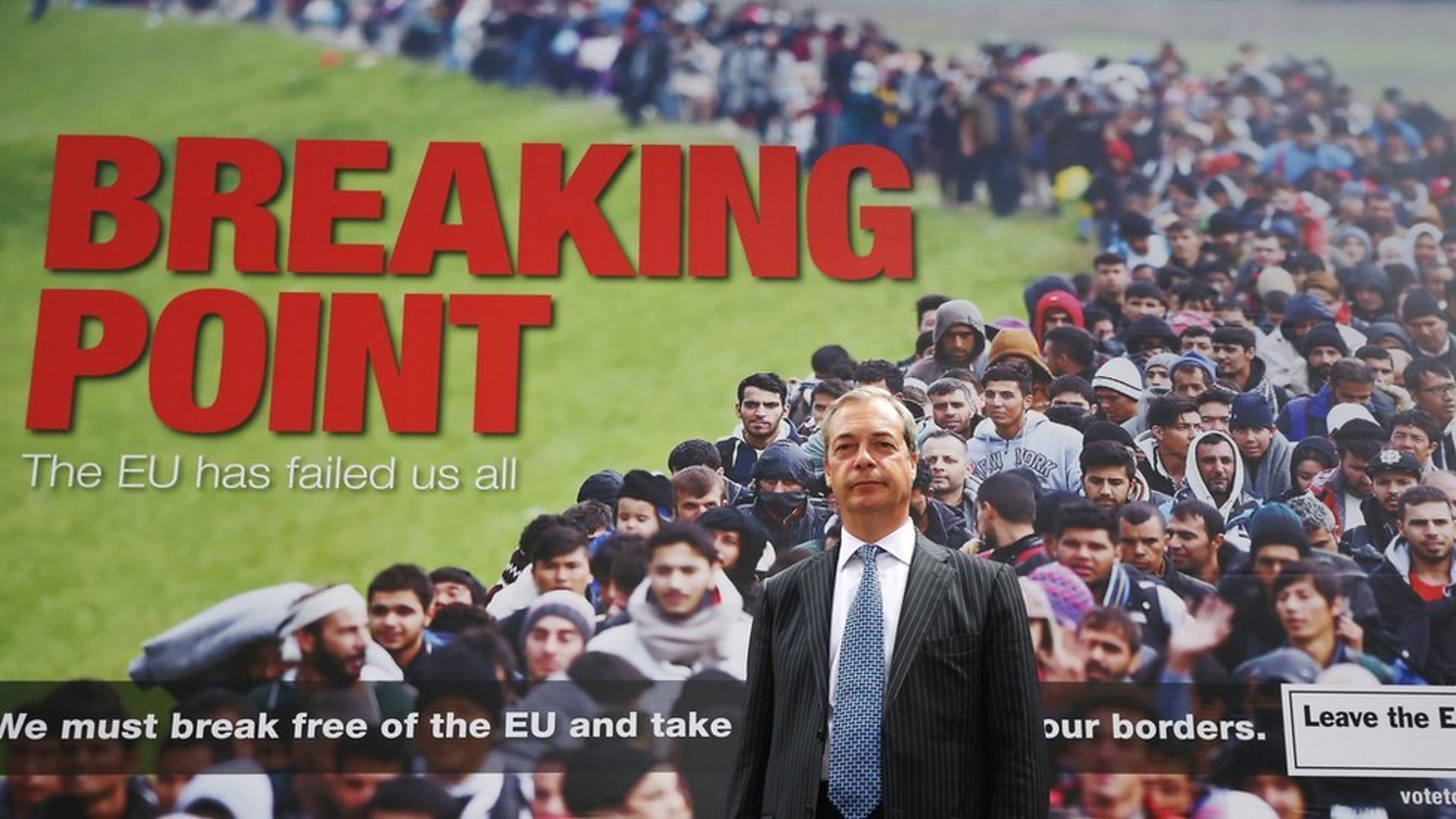
The politicians who told them (even for the time) quite obvious lies have not suffered any political consequences, far from it. A photo circulated on the night of Brexit where Farage was stood in front of a chart of GBP tanking while laughing. You'd think that would be his death knell! He likely shorted the pound for personal gain. Yet today he is more successful and more prominent than ever.
In short, I don't think there has been a reckoning. We are still dealing with the consequences, and likely will for a long time whether directly or indirectly
You convinced me! I wish I had multi-national committees of bureaucrats deciding what to do with the money of my countrymen, they know what's best after all
I am telling you that most of the good developments in my area - which is deprived and would not have had the funding otherwise - were through the EU regional development fund. Whatever you think of it, that is the reality.
> As an American, is that the generally-accepted viewpoint now? That Brexit was a mistake?
As a Brit who left the UK about 4 years ago but still keeps up on UK issues and news, I think this is overplayed. Sure, polls have showed the result would probably go a different way now, as it was somewhat marginal in the first place.
But the people shouting loudest about how much of a mistake it was are generally the same people who were shouting loudly about how much of a mistake it was going to be before the vote, who are (rightly or wrongly) still very bitter about it.
The generally accepted viewpoint on the ground seems to be "are we still talking about that?"
Which isn't so much an endorsement of the status quo, but a weariness of endlessly going over old ground and old battles, and general ennuis with the topic.
Politicians in the UK don't really discuss it much. The conservatives are still very pro-brexit because they own it, and because they are dancing towards the alt-right in an effort to end-run the 'Reform' party that's currently nipping at their heels (and who may as well be the UK branch of the MAGA franchise). Labour just don't want to touch it because they know that it's still divisive and they have enough other stuff to contend with. The most they're willing to say at the moment is that they would really like a better trading relationship with the EU and are pursuing closer trade deals. In the wake of Trump's tarriffs this seems to be accelerating as everyone else is scrambling to trade with whoever is more reliable than the US.
The media, AFAICT, have mostly lost interest too. The Guardian still runs some half-hearted pieces in the general direction every so often, but there's no serious 'rejoin' campaign even there. It doesn't help that many EU countries have since swung rightward and are taking anti-immigration stances now, so it's not such an obvious left-wing panacea as perhaps it once was.
The UK feels like a country in decline, and Brexit is probably a part of that, but while it casts a big shadow over everything it's not necessarily the most important problem the nation faces and it's not like there's an active political campaign to rejoin. It's been "kicked into the long grass" so to speak.
The UK public in general were never all that crazy about it, over the 47 years of membership the EU was always 'them', not 'us'. It was something that happened somewhere else, less important than local politics and local concerns. It was convenient to blame the EU when UK politicians couldn't or didn't want to fix something and needed a scapegoat. EU elections were always a sideshow with low turnout. For most it never felt like some aspirational thing, or relevant to daily life, just another layer of bureaucracy and a very remote one at that. British people were some of the least active users of freedom of movement to relocate, with more emigrating to the US, Australia and even China in recent years. It's easy to see why that created a situation where leaving was on the cards, and why the overwhelming response to it five years after leaving and almost a decade after the vote is "meh"
As per most things these days ... there's a core 30% of nutjobs who will not change for anything. Another 10-20% ride along with them and balance against the moderates and, together, they either shift the Overton window, or outright win.
It'll take probably 5-10 years before the 10-20% own up to "being had".
And, by then, the damage will have been done. And you'll only start to be thinking about how to repair it then ... and then that will take a generation to execute and recover from.
It's also instructive to look at American attitudes toward the Iraq war. I'm pretty sure that many people who now say it was a terrible idea and that they voted for Trump because they don't want to be in any more wars were absolutely rock-ribbed supporters of it at the time. Asking if they think Obama did a good job in extricating the US from that conflict serves as a useful litmus test.
Ron Paul 2008 and 2012 taught me this whole thing is a farce of statecraft. Consent to governance has to be manufactured, alchemically transmuting vice and violence into virtue and victory. Meme Magick™ is more real than anyone could imagine, yet so elusive many will never touch it and know.
I'm a Brit who went through Brexit. I think most people got the idea it was going to be economically stupid before the vote but the Brexit voters prioritized independence over that. Also just shaking things up because they were unhappy with how things were going for them personally.
It was hard to be sure as there were so many options - hard Brexit, soft and so on that it was unclear what the deal would be. At least with Trump you can vote him out again whereas we are kind of stuck with Brexit.
We hope. He keeps talking about ignoring the term limits set in our Constitutional Amendments. Jan 6 2021 was an ineffective coup attempt, but a coup attempt nonetheless.
Heinlein's Future History saw Nehemiah Scudder win the last American elections in 2012. We've luckily made it a few elections past that date, and the Future History was not a prophecy and was a bit kinder in that you could escape to the Moon or Mars or Venus this decade. But it's hard not to fear the same sorts of theocratic and fascist "urges" are cyclically at play in the current decade and not worry about possible consequences, such as and including the end of the US as we know it.
It’s not fair to characterize Brexit — a ridiculously over simplistic yes/no referendum question — as being inherently bad.
I think a charitable reading of your comment ought to replace Brexit with the subsequent implementation of Brexit by successive Conservative governments.
That’s also quite possibly what you meant anyway, but it’s still worth saying aloud.
> What does it say that people who voted "yes" without a clear plan of action already on the table?
The UK government explicitly refused to make a plan of action.
It turned out to be a foot-gun moment.
The leave campaign was not representative of people in office who were basically all remainers, and the referendum would not change the makeup of Parliament because it's not an election. As a result they had no ability to make an official plan or even an unofficial one which could be put into place afterwards, because they did not have the power to do that and the vote was not going to give it to them.
The government's reasoning for not making a plan seemed to be that it might be too appealing if there was a plan, and they didn't want to give leave campaigners the ability to say "See, there's a plan, it'll be fine", when remain campaigners could instead use the lack of plan to say "Are you crazy, you're voting for the unknown! There's no plan!". And they were confident that the leave vote was DoA so making a plan was a waste of time and money anyway.
This seems like dirty pool to me, and it backfired anyway. Turns out that chaos and uncertainty was more or less explicitly what some leave voters wanted - give the whole establishment a kick in the pants.
I voted remain, FWIW, but I think holding "there was no plan" over leave-voters heads is a bit rich given why there was no plan.
Also in my understanding, it was a gamble by David Cameron. He promised the referendum before the previous general election, believing the Tories wouldn't get a majority and he could blame the Lib Dems coalition partner when they blocked the referendum, then the Tories did win outright and oopsie, what do I do now, I've got to hold a referendum with no plan. Basically unintended consequences. Moral of the story... be careful. Maybe Cameron had had a long day and was tired or something when he made that decision ;)
> The UK government explicitly refused to make a plan of action.
Could you elaborate on that?
I would assume that it would be the responsibility of the leave campaign to provide that, but that's not the case?
I wonder, then if the mistake was to allow the leave to be executed, even if a plan couldn't be created in the time frame allowed. Maybe having an abort clause instead of jump off the cliff if the bridge isn't built yet.
Maybe the referendum should have required the government to build the plan which would be decided on later.
The mainstream political parties in the UK since the 70s were pro-EU, though with some muttering at the fringes. Among the general public there was a bit more ambivalence. Anti-EU sentiment was generally written off as racist, stupid etc etc and this wasn't necessarily wrong because the loudest voices were parties like the BNP - basically 'out' fascists.
This changed with the accession of central and eastern european countries to the EU. <ost western EU countries imposed a two year stop on free movement but then Tony Blair wanted to "rub their noses in diversity" (referring to the sceptics) and opened the doors to the UK on day 1. Immigrant populations became much more visible very quickly and as a result so did anti-EU parties like UKIP. When a woman asked the next PM, Gordon Brown, something about migration, he was caught on a microphone he thought was deactivated saying something about "that bigoted woman" and the flames were fanned ...
2010s - the UK has a coalition and to curry favour with the eurosceptic side of the electorate the conservative prime minister, David Cameron, goes into the 2014 election promising a referendum. He's still sure it's a fringe issue and once people have had their say on the matter UKIP, (who are starting to eat 'his' vote share on the right, will be neutralised and we can all stop talking about it. This had worked for him twice - in coalition he was forced to run one on changing FPTP to AVC voting and through a campaign that I think was run on disinformation he managed to head off any further discussion on democratic reform. He also granted the Scottish government's wish to hold an independence referendum and then successfully campaigned for a "remain" vote there. He was on a roll.
So he calls the EU membership referendum.
The terms are set - a simple in/out question. It was legislated as a guiding referendum rather than a binding one. The difference is that the act of parliament introducing the referendum on AVC already contained legislation that would have been triggered the next day to change the voting system if it had passed. Power was actually delegated from Parliament to the people in that case. In contrast the EU referendum and the Scottish Independence referendum were more like national opinion polls - they didn't establish anything in law beyond the result itself.
The PM and his whole cabinet are pro-business, fairly socially progressive conservatives. Definitely pro-EU. As are the main figures in the Labour party (mostly). So the establishment all rally behind the remain campaign. It is assumed that there will be an easy, comfortable win for remaining even among hardcore leave supporters. Despite the referendum being advisory/guiding, David Cameron says that a vote to leave will be acted on immediately with no plan or preparation to try and scare people into voting remain. When opinion polls start to look a little bit dodgy, the chancellor threatens the country with a punishment budget including big tax hikes if leave wins. The spectre of uncertainty is raised repeatedly but in the end that gives ammunition to the 'leave' side who call it out as "Project Fear", a term the pro-independence scots had coined to describe the 'remain' campaign in their referendum.
> Maybe having an abort clause instead of jump off the cliff if the bridge isn't built yet.
> Maybe the referendum should have required the government to build the plan which would be decided on later.
So thats the thing - the law that created the referendum didn't include any requirement or any plan to do anything whatever the result. The way the whole shebang was run, nobody had the power or the mandate to make a plan because the referendum was advisory and was really only meant to be for show. The real plan was that on the 24th of June 2016 David Cameron could address the nation and say "See, we told you, the British people have spoken, shut up about the EU, let's get on with our lives".
But when you as Prime Minister call a referendum and promise (or threaten) that the result will be carried out post-haste, even when you have quite deliberately not set out a course of action or legislated for it, and you lose ... you've backed yourself into a political corner and you basically have to do it.
Which is why he resigned the next day.
And that's why there followed years of parliamentary arguments, court cases and in-fighting about what the hell to do next. You can't just throw that sort of thing aside. If over half of the people who voted, voted to leave, it's probably electoral suicide to ignore it and you're paving the way for UKIP to rise. You can't ask for a do-over, because there's a perceived history of the EU getting people to re-vote on important issues (Ireland, Denmark IIRC(?), to do with referenda rejecting the new EU constitution/Treaty of Lisbon) and the 'leave' side would have had a field day portraying the whole edifice as profoundly anti-democratic. But the majority of the people who are tasked with coming up with a plan don't want to do it. Eventually the government collapses, but the conservatives are re-elected on a promise to "get brexit done", which brings Boris Johnson to power and gives further political mandate to leaving. Through a variety of political manoeuvres, some questionably legal, a plan is finally approved and put into action four years later.
Sorry for the wall of text :)
Anyway, all of that is to say that while Brexit may well be the greatest act of political self-harm the UK has carried out in a good long while, that's why I feel the specific criticism that "You voted for something when there wasn't even a plan you dumb shits!" isn't really fair. There was never going to be a plan, and if they didn't vote for it there was probably never going to be another chance.
tl;dr - there wasn't a plan because the people with the power to make one didn't want one.
I'm an immigrant living in the UK, and have been for over 20 years. I'm practically British now, without the accent. I don't disagree with much of your post, but some of it feels emotionally biased.
>the chancellor threatens the country with a punishment budget
Biased. And whatever cause and effect ended up being, our taxes have risen, immediately after the result came in GBP dropped, we had inflation, and to counter it all interest rates were dropped from already extreme low levels even further. There are no widely respected economists (though they're hard to take seriously anyway) who think leaving the EU has not harmed the UK.
So, I consider it the duty of the chancellor to have informed us of this, because the other side of the argument (the brexiters) had not one bit of moral integrity to present reality. Remember, we're dealing with a group of people who lied for 40 years to achieve their aims. No other country in the EU required an EU hosted web page dedicated to countering all the anti-EU lies.
The brexit side effectively ran at least two campaigns, with plausible deniability by the "official" campaign because Farage wasn't on their team. Farage was the face of the less savoury side of the campaign, and his group ran using things like this:
https://ichef.bbci.co.uk/images/ic/1920x1080/p078zmng.jpg
While on the "official" campaign we have gems like this (I still genuinely laugh when I read this blog post):
I watched all of this unfold, as an immigrant living in the UK, and we (immigrants) were very acutely aware of the sentiment that drove the brexit vote.
So, what is my main take-away from all of this? That this referendum was about two valid political choices, remain inside a pooled sovereignty union, or leave that pooled sovereignty union. Both valid choices. But the travesty was how poorly the referendum was constructed and run. And that is because we just don't have a history of running referendums very well (see the alternative voting referendum), and this would never have passed the sniff test in for example Switzerland.
I don't think that bit's biased, myself, George Osborne literally threatened a punishment budget before the referendum. He may not have used those words, but everyone else did and he did come out telling everyone that he would be having an emergency budget after the vote which others in his party described at the time as "economic vandalism". IMHO there's a difference between telling people that they're making an economic mistake and detailing what will go wrong (which he did too), and saying "I'm going to raise income tax, raise inheritance tax and slash the NHS budget within a few weeks if you vote leave".
> So, I consider it the duty of the chancellor to have informed us of this
Absolutely agree, but that's not what I'm referring to.
I agree with the rest though, it was a clusterfuck in so many ways. I'm not going to try to claim I'm entirely unbiased - in the lead up to the referendum I was definitely in the 'leave' camp, part of the group of people who just wanted to see British politics given a righteous kick up the arse, regardless of what form that came in. I sorta came-round in the last few days and voted remain, mostly because I knew if Brexit happened a lot of people I care about would be upset, and some would have their lives upended. And then I got to watch it happen anyway.
Having seen the news from Runcorn today, I feel it's a shame the British people haven't got tired of the Farage clown show yet. But then my own father would probably vote for him (probably does), because he's got suckered into the Old-people's-outrage channel, GBNews, which can't be good for his blood pressure let alone British democracy. Currently I'm hoping (I think realistically) that my adopted home of Australia does better in the general election tomorrow. I'm not yet a citizen so just spectating on this one.
I could have used wars as an example (Iraq, Afghanistan, Vietnam), but Brexit feels like more of a parallel as it's non-violent and somewhat economic. We will absolutely have a conclusive outcome for what we've decided to do as a nation. The unfortunate thing is we are not going to get back 4 years of our lives. It's just going to evaporate and that's the thing that political fervor masks. You got one life, you can spend it fighting China, I suppose. In the case of Europe, you can spend it exiting it, I suppose. There's a serious opportunity cost here that wasn't properly discussed due to the zealotry of both sides.
Policy discussion seems to be something the masses cannot handle without clearly defining an "other". I feel Jeffersonian (bigoted) in suggesting that it's a mistake to give ordinary people access to this debate. Almost like letting ten year olds get involved in how mom and dad handle the mortgage.
There are an infinite number of Brexits we didn’t get. We only got to try one. For most purposes I think it’s pretty reasonable to equate ‘Brexit’ with that one.
Frankly, I don’t think any of the Brexits we stood any chance of actually getting could have been good: it was only a question of how bad the one we eventually got would be.
And the problem with the less bad Brexits was: they would be less bad, but they would also be more directly comparable with no Brexit (e.g. “in order to improve trade we’re going to follow all the EU’s rules but not have a say in any of them”).
> (e.g. “in order to improve trade we’re going to follow all the EU’s rules but not have a say in any of them”).
We de facto do that anyway, because most of our trade is conducted with the EU and companies aren't stupid. They don't want to design and build to multiple different standards, so they just adhere to EU rules for simplicity and cost reasons. But now we don't get a say in those rules.
True. But given that's true, it would be so much better to be inside the single market or customs union. But apparently those are still 'red lines' ...
> If it had actually reduced mass immigration from the third world, as voters were promised, it would have been good.
There isn't a very high bar to understanding that immigration from "the thirld world" had nothing to do with the EU.
As an immigrant to the UK, I was very acutely aware of the sentiment leading up to, during and after the referendum, but I was mortified by the ignorance displayed by people around the topic.
I'm from one of those third world countries by the way.


For those that went through Brexit, can you detail when the larger population realized it was stupid? That's the only pattern I can see the U.S matching at this point.