US GDP per capita is larger then it has ever been. We are richer then we've ever been and this economist predicts we'll be richer still for the foreseeable future. The problem is that 30 years ago or so the middle and lower classes stopped receiving any of the gains.
Healthcare providers and insurers have received much of the gains, it's not just a class issue. Since 2001, employers' benefit costs have risen 60%, which is almost twice the rate salary increased. Perhaps salary increases would've outpaced inflation, leading to the real wage gains everyone's missing, if that money weren't being diverted into the employer's share of health insurance premiums.
Looks like about 40% of the increase over the last 30 years can be attributed to increased "health" spending. Health as a percentage of total has gone from ~10% - 22%.
Maybe a nit, but spending more on health care doesn't mean there were not "real wage gains". The wage gains were real, and people spent a big part of those gains to get more healthcare.
Another way to phrase it... If health spending had stayed constant since 2001, how much less "care" would the system be providing right now? All that extra spending is not pure waste, I'd love to see some hard studies on how much "waste" has increased and how exactly do you define it?
If you meant "economic gains" as-in healthcare's share of the overall pie has increased, and so healthcare as a sector of the economy has seen an outsized share of gains, that is definitely true.
It's also called an insurance pool. You don't pay based on your own current cost, or even the old unemployed people's current cost. You pay based on your own expected lifetime cost, which is increasing substantially for those young employed workers.
ACA flattened the rating factors a lot to shift cost to younger insured. Personally I don't think that was good policy. You have a lot more disposable income after the kids graduate college, it's not necessarily a bad thing for health care costs to be shifted later in life. But annual premiums rise for the young anyway because their expected lifetime benefits are increasing substantially every day.
I guess my point is we all pay in, and we all ultimately take out of the system. If it was single-payer the cost would be exactly your marginal tax rate. As-is the cost is highly correlated with your marginal tax rate but just with a much lower cap.
>I guess my point is we all pay in, and we all ultimately take out of the system.
And my point is that young people disproportionately pay in a larger value and disproportionately take out a smaller value.
> You pay based on your own expected lifetime cost, which is increasing substantially for those young employed workers.
So would a person who would be expected to live forever pay all his income? If you are expected to live longer then you should be expected to pay for longer and not more per year.
I should have been more precise. You pay based on your own expected lifetime cost, over your expected lifetime. For example, something like $300,000 / 80 years or $3,750 per year.
The entire model is predicated on not paying in each year exactly how much you take out in benefits. That would completely defeat the purpose. So, of course young people pay more than they take out, while they are young. Almost all of those young people will also eventually get sick, hopefully old, and need health care for many years in excess of the amount they are paying in that year.
Are younger people actually subsidizing older people over the long-run, in other words, are younger people today on a track to pay in more than their expected lifetime cost? I doubt it, I think that would only happen if a future event dramatically cut the cost of care, you could end up having over-paid if care became abundant and cheap.
Another way to think about health insurance premiums is, you are born, you start $300,000 in debt. That's about the amount of healthcare you're going to consume, and you have your lifetime to pay it off. But that "debt" is also growing at ~5% based on increasing cost and complexity of available therapy, and average number of therapies someone can survive. The average 25 year old should have paid for about 30% but may have only actually spent 10% of their healthcare budget so far, but you can rest assured the balance will eventually be spent. Doesn't mean they are being ripped off by the old people!
>The entire model is predicated on not paying in each year exactly how much you take out in benefits. That would completely defeat the purpose. So, of course young people pay more than they take out, while they are young
and here's the gist of the scam. It's a pyramid scheme where the new entrants i.e. the young people pay for the old people's costs.
The young people would be far better off investing the money they are paying for old people's healthcare and then using that money for themselves when they are old.
And how much have the old people paid into ACA? They couldn't have possibly paid any because the ACA didnt exist when they were working. So where does the money to pay for their healthcare come from if not from the young people.
So yes they are being ripped off. Young people are having their hard earned money taken to keep old people on life support so they live longer to take more money from young people.
Far better off investing the money? No, because sometimes young people do get sick and need insurance, so you can't just invest your early payments, keep the returns for yourself, and skip the insurance, because then you're bankrupt if you lose the "lottery" and get sick at a young age.
Most young people will eventually become old people. It's by definition not a "pyramid scheme" if average total lifetime benefits are designed to equal average total lifetime cost. It seems like you are upset that an insurance policy is acting like an insurance policy should by spreading cost over time and averaging costs across members of the pool?
That medical costs have positive feedback (better more expensive therapies allow patients to go on to have more, better, more expensive therapies) is definitely a huge fiscal challenge. But it's also why young people are more likely to be underpaying now for future benefits they will receive, not overpaying.
What about education? Seems like everyone I know has substantial student loans. And that's a double dip because it's the school and a bank making money off the student. The next tend is employers paying part of the student loan. Just like how employers started to pay for health care payments. Then the costs really went up.
41 years actually. The rich started getting richer in 1975.[1][2]
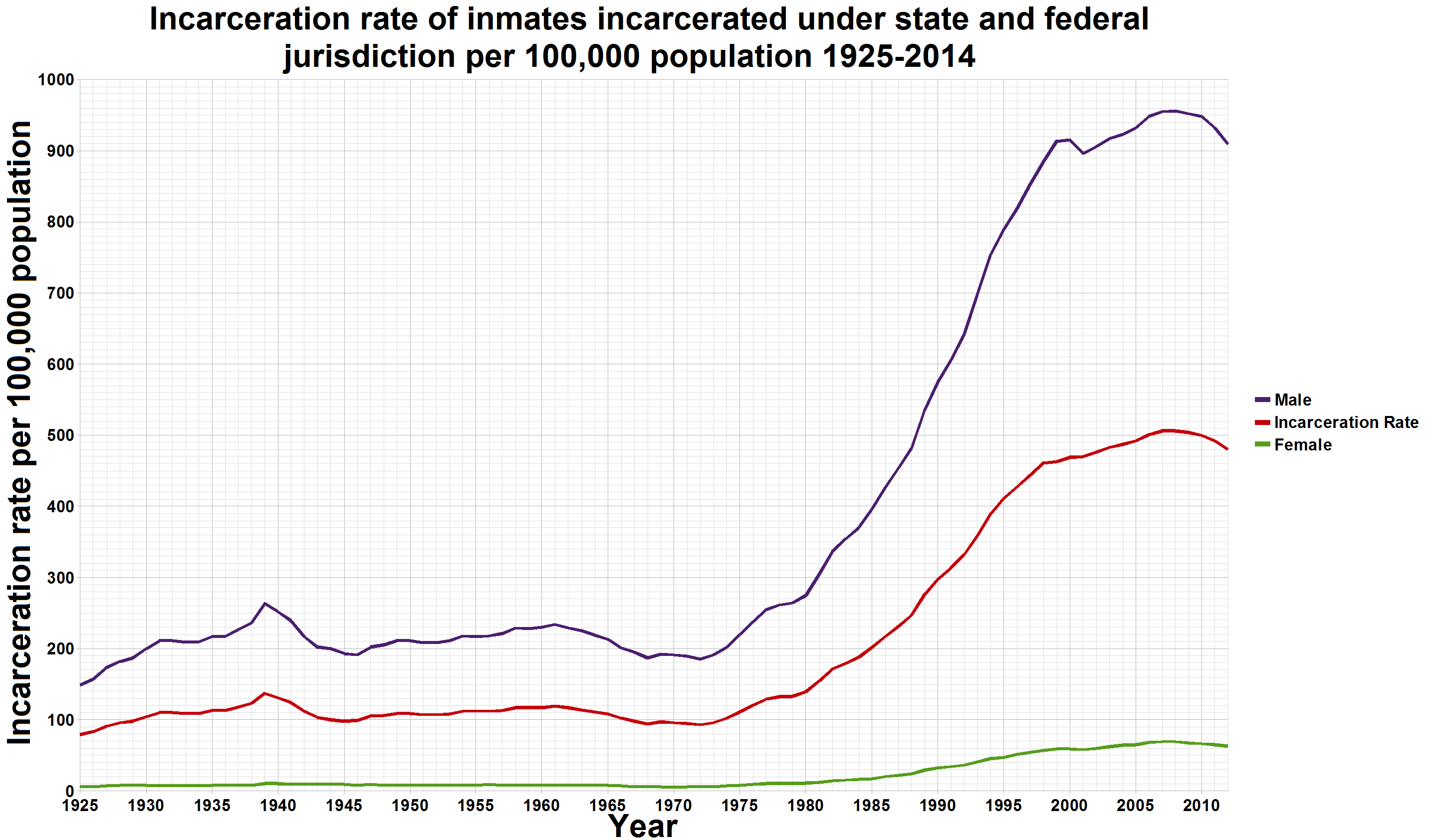
Other notable things that happened in 1975: incarceration rates began their meteoric rise[3], and the "Halloween Massacre"[4] in which Donald Rumsfeld, Dick Cheney, and George HW Bush seized power, becoming Secretary of Defence, Chief of Staff, and head of the CIA respectively.
I would be extremely wary of considering GDP a proxy for economic health, particularly when the military-industrial complex exists.
If you talk about GDP then you have to talk about inflation, which is tricky to measure. The official inflation number is for debate.
And one mans assets are another man's debt. This can unwind pretty fast. Look at all the people that are "entitled" to retirement benefits. Good luck with that in the long run.
Yet curiously the middle and lower class enjoy a higher standard of living today than 30 years ago. It's almost as if GDP/income aren't an absolute measurement of, well, anything.
I suspect your down-voters are thinking "are you sure about that?" Maybe they have smart phones and other gadgets which are highly advanced, but they might be living in a smaller place and less able to afford other things. I'm not even stating this myself, although it might be true... I just haven't researched it. But it's a thought that occurred to me.
Wage income may not have increased much for lower/middle class over the last 30 years, but certainly gross income counting welfare benefits has increased significantly, so perhaps that could have something to do with it.
I've just started the book this guy wrote. It's really good so far and is very readable. It's not like the epic and unreadable Picketty.
Note that he is saying that the growth were getting will be the same as levels from 1820 to 1870, just not the same as it was from 1870 to 1970.
The book is worth reading because he has loads of data, not just Internet comment opinions about how things are going. Even if he is wrong and productivity shoots up again he's shown fairly strongly that between 1970 and 2016 growth has slowed.
The consequences are pretty serious for the welfare state. Either benefits cannot continue to grow or taxation must increase.
Per capita GDP has been going up far faster than entitlement spending per capita. The top have been getting most economic gains and fewer taxes which is the core problem.
We could talk about long term demographics, but GDP growth is loosely tied with workforce size.
PS: A lot of systemic corruption is also going on. Almost half of the lifetime gains from a 401K ends up as management and other fees, that was clearly designed to make someone money, but not working class Americans.
Hauser's law, that states that federal tax revenues since World War II have always been approximately equal to 19.5% of GDP, would suggest that tax levels are similar as a percent of per capita GDP.
Local, State, and Federal = ~32 to 42% GDP over last 30 years. http://www.usgovernmentspending.com/spending_brief.php?brief.... Defense for example is all over the map, 7% under Reagan down to 3.45% with Clintion then bumped under Bush to amost 6% and then back down under Obama.
PS: US tax code is designed around talking points so people can support all sorts of things. But at the end of the day Total government spending is what's important not what you call it.
Thanks for editing to point out that is Local+State+Federal. sien's point and "Hauser's law" is about Federal revenue and specifically how Federal tax revenue doesn't seem to respond to policy changes in the marginal Federal income tax rates as you might expect. They are both good metrics to consider at different times, for example sometimes you ignore certain classes of taxes and spending (like local/property taxes which are largely for K-12 education) when you want to focus on welfare spending, which is 95%+ Federal.
https://research.stlouisfed.org/fred2/series/FYONGDA188S Even then federal outlays go from 10 to 25% post WW2. There is little support for a law. People love to pretend marginal rates are the hole story while ignoring tax breaks, social security, gas taxes, etc. it's a political tug of war and positions hate to make things clear cut.
Ex: hand outs in the form of very targeted tax breaks are rarely considered spending even as they subsidize industries.
Perhaps you can answer a question I would ask him. My quality of life is hugely improved by things for which I pay nothing, e.g. the information freely available online. Do his calculations take into account things which don't register as standard economic activity?
I would guess that if you looked at the time it takes someone to learn a new skill you'd have a metric showing an even faster improvement than the total productivity gains of the baby boom generation.
He talks about some remarkable things about GDP and how the economic numbers don't capture improvements early on. For instance cars were not looked at in terms of inflation in the US until 1935.
Total Factor Productivity is looked at extensively.
Curious what this slow-growth world does to housing prices. Our governments seem to be fueling epic housing bubbles by having low interest rates. I've heard two arguments: buy now or never be able to afford (since increasing rates will affect monthly payments), and the crash is just around the corner .. as soon as rates rise. Which is it?
As a joke ... I wonder if we have zero innovation if all the scientists, PhDs and many other smart people spend all their time trying to deal with property prices and less on coming up with actual invention. But seriously ... I hate my life. If I buy now, I'll be paying a mortgage till the day I die. Any misfortune will destroy us. Taxes keep increasing, job stability keeps decreasing. Wonder if I am the only one who feels this way.
Houses are a bit of a weird market. There's supply and demand, but the market isn't driven by the purchase price of the house. It's driven by the monthly payment (because most people buying houses are getting mortgages, not paying cash).
So when interest rates rise, house prices decrease, and the monthly payments to buy the same house stay almost exactly the same.
For the benefit of those who haven't tried to read Piketty, I highly encourage you to do so. I don't agree with all his proposed causes or solutions, but the data is very interesting. And I didn't find him unreadable at all, in fact highly enjoyable, if you're the kind of person who likes to read serious non-fiction.
Yeah. It's worth a go. Kudos to anyone who can get through it.
I read a fair bit of non-fiction but found that book terrible to read. It's not his fault. It's an academic book written in French that just happened to take off.
Check out historical Federal tax receipts as a percent of GDP [1]. It looks like median is around 18% of GDP and it's been that way pretty much since the 50s. For recent history, Bush years ranged 15.6% - 20%, Obama years it started at 14.6% but is estimated to be coming back to around 18% by this year. In the last 16 years, we saw both the highest collections as a percentage of GDP (20% in 2000), and the lowest since 1950 at 14.6% from 2009-2010. Also from a 2.3% surplus in 2000, to incredible deficits from 2009 - 2012.
Looking at the total amount collected, combining the policy shifts (the % of GDP collected) and economic growth (the actual GDP) -- total receipts in 2009 was $2.1 trillion, but 2016 is projected to be $3.1 trillion -- almost a 50% increase! So what this tells me is policy and growth together can have a tremendous impact even in a relatively short time window, and taxation has also increased already very significantly as of late. Of course, even with a cool extra Trillion dollars coming in, we still manage to spend it all and more. (What the heck are we spending an extra trillion dollars on anyway?!)
The only way benefits can continue to grow without taxation increasing is if we can get more value for the same dollars. That's why I think the "solution" if there can be one, must come in the form of a radical reduction in cost somewhere. For example, total spending (not just government) on healthcare is about 18% of GDP now. When we talk about welfare, healthcare is a huge component of overall welfare spending, and if you can decrease not just Medicare/Medicaid but overall healthcare cost (better results for less dollars) you provide a lot of value to everyone. I think more effective than trying to figure out how to tax at 20%+ of GDP (and to sien's point about Hauser's law, is probably not even possible without a fundamentally different mode of taxation like VAT), we need to figure out how to achieve massive productivity gains in healthcare.
An easy place to start is always to blame someone else... Well, the rest of the world is certainly reaping huge savings off the largess of American healthcare spending. And to some extent I'd say that's a very good thing, new life-saving medicines is one of the best ways that American prosperity can positively impact the rest of the world. Probably it's not sustainable at current levels (as assessed by American %GDP healthcare spending vs. other developed nation averages). And some savings could be gleaned from figuring out better ways to cost-share with the rest of the world better, but the gains from that alone wouldn't be nearly big enough. We need to find much more cost effective ways to research, develop, and practice medicine.
So then you turn to how can we achieve savings through medical technology... But it seems like medical technology over the last decades just drives increasing costs (is there good data on this?). Certainly spending overall has increased quite consistently, but I assume much of that is increased utilization as much as increased per-patient cost. The big question in my mind is will we see a "4th revolution" specifically in the case of medicine which could drive costs down 50-90% from current levels. Perhaps this is "slaying the dragon" [2] thinking and, in the context of the article is one of those "50+ years out" unpredictable events. In the shorter-term, maybe we could start to see more robotics/automation in the long-term/elderly care segments, that type of thing... Or as our ability to sequence and customize medicine based on genetics continues to develop, I hear that could also serve as the foundation for large-scale increases in cost efficiency. Some argue there is a structural problem, like evergreen patents, that prevent technology from ever bending the cost curve, and that's probably true to some extent, but I feel like that's still just a peripheral issue which is easier to attack but not the root of solving the problem. Perhaps the fundamental problem is the significant negative reinforcement as better medicine extends lives of retirees driving up both 'lifetime medical costs' per capita as well as 'years of received welfare benefits' per capita -- doing "better" just drives up costs even more!
  The Lifetime Distribution of Health Care Costs - Principal Findings

  Per capita lifetime expenditure is $316,600, a third higher for females
  ($361,200) than males ($268,700). Two-fifths of this difference owes to women's
  longer life expectancy. Nearly one-third of lifetime expenditures is incurred
  during middle age, and nearly half during the senior years. For survivors to
  age 85, more than one-third of their lifetime expenditures will accrue in their
  remaining years.

  Conclusions

  Given the essential demographic phenomenon of our time, the rapid aging of the
  population, our findings lend increased urgency to understanding and addressing
  the interaction between aging and health care spending.
This article may (or may not:) be a little short sighted.
Basically it claims the inventions of what it terms "The third industrial revolution" (computers) affect a much narrower slice of life than the proceeding industrial revolutions. So they won't produce the growth the proceeding revolutions did and the rapid growth is over.
But earlier in the article:
"GORDON: When we had the invention of steam engines, steam ships, locomotives, factories making cotton fabrics, and then the telegraph. All of those things were invented in the century between 1770 and 1870. And they set the stage for the inventions that happened after 1870. "
So there was a lag between the large number of invention and the true realization of potential in subsequent inventions and thus improvements in life.
First of all I don't think digital technology does affect a narrower slice of life when looked at in broader terms. I think it affects an even greater slice of life. True we have a bunch of cat videos and Facebook but that's just the surface.
But the main point, going back to the lag, I believe that is where we are now. We have the technology and are really just getting started with what it can do. Digital technology hasn't really infiltrated everywhere it can and many things are still being done in inefficient ways. When the subsequent set of innovations begin to appear I think we will see an even greater increase in standard of living than the previous industrial revolutions. More efficient distribution mechanisms. Better control over biology (including our own). Automation and robotics. Things like that. Social structures need to catch up though also... likely part of the reason for the lag.
Yes! To a large extent the visible nature of digital technology is a reflection of the capability of people to take advantage of it.
If we never progressed past the Commodore 64, we could still be discovering advantages and uses for it. As it is, new tech is coming our way far faster than we can effectively apply it.
Or, to rephrase, a lot of office work could be completely replaced by a basic excel spreadsheet macro, let alone machine learning and the latest neural networks.
An interesting and relatively thorough account of telegraph type technologies can be found in the early portions of James Gleick' "The Information", which I highly recommend.
Spolier Alert:
While the semaphore/flag telegraphs were a huge improvement in information speed and bandwidth in Europe, they were easily beatin on both points by "drum language" based communications along the Congo River, which predated telegraphs by some hundreds of years.
The drum language was a code implemented by tapping on a sequence of high and low pitched drums in a manner that corresponded to the high and low tones of most of the (Bantu like?) dialects along the river. This isn't exactly binary since the timing of the beats mattered, but at any rate there would still be lots of ambiguity in mapping tone sequences to sentences. For example, in:
(a) I have THREE pigs FOR SALE today
(b) I know WHERE they HID YOUR cattle
(a) and (b) can't be distinguished by their syllables and "tone" (designated by caps.)
So There was a kind of hack that got implemented, where they would rephrase the message using semi-standardized groups of idioms. So you would have something like:
(a) I have THREE pigs FOR SALE today
(a) the FAT pigs numbering THREE FOR SALE on this nice day
(a) THREE little piggies I have at my MARKET today
and so on, until one has enough tonal and timing distinctness to map to a unique phrase. The message its self would naturally pass at the speed of sound, for maybe 1000 meters or so, before it had to be repeated, sometimes with the encoding changing at the boundary of different dialects. But apparently the repeating/encoding was rather efficient.
Pigeons were once used to cheat in the lottery in England. I don't know the year, but I'd imagine it was before the telegraph. But it used to be that you could still buy tickets after the draw had been made in London - the results would travel by horse, but you could use a carrier pigeon with the lotto results to outrace the news.
>As compared to me, where I think that new technologies are coming, but they’re occurring at an amazingly slow pace.
This is problem with economists analyzing technological growth in the economy. They think there must a new google or iphone to come out every 10 years.
20 years ago very few people have ever sent an e-mail. Now I can send an e-mail/call anybody from any place on the earth. We are making significant technological progress and it's where the most growth is at the moment.
Those kinds of technologies are coming at a faster pace too.
But the fact you discount search engines and cell phones kind of shows how fast new technologies are moving. They're on the same scale as cotton gins but we don't have decades to marvel at how they were gamechangers because they seem like nothing a couple years after they are invented and there is so much more going on.
If you have to call something technology or science, it probably isn't quite there yet. I don't call glass, agriculture or steel technology, but their price probably affects my personal economics a lot more than Google and cell phones. If we call it technology or science, it means it is that thing, but it is probably new within a generation. It isn't physics science but it is neuroscience, etc.
I've always kinda hated "Freakonomics" - albeit irrationally. It just never felt like the author truly understood the difference between correlation & causation.
I too grew a distaste for them, more accurately the Freakonomics Podcast. Steven Levitt comes across like a total snob and he has all these annoying quirks and preferences, I find his personality really irritating. He reminds me of someone who won't do manual labour and thinks it's funny and charming to be someone who sees anything physically strainful as being this horrendous undertaking. He really embodies so many detestable human qualities, and that's the thing, it's like his 'image', he's this weirdo guy who gets to be reprehensible because he's a notable economist. Also their Podcasts frequently air re-runs, and their shows consist of 1 revelatory finding (i.e. legalizing abortion reduces crime rate) that they drag out for 30 mins until you get to the 'gem' of their findings. That being said these are personal gripes from previously being an avid listener who got tired of their stuff.
If someone consistently misrepresents facts, that's one thing. If they constantly produce content and sometimes fail, that's another. Freakonomics is cool for new ideas, but if you really get excited by something they publish, it's worth doublechecking. I don't think discounting them as gossip based on one article is the right solution.
There's nothing wrong with "content" when it's purely entertainment, but freakonomics falls well into the TED, Malcolm Gladwell, "fake-insight" category, that makes you feel clever about knowing some counter-intuitive fact, when the majority of the time, it's only counter-intuitive because it has been presented unintuitively in the first place, or because the fact is actually bullshit.
I suspect we're on the verge of pretty big advances in genetic engineering, robotics and other physical technologies, including technologies that are likely to spur the development of other technologies. Genetic engineering of embryos for increased IQ is looking very feasible, for example. This is likely to increase the pace of innovation drastically in those countries that allow it.
> Genetic engineering of embryos for increased IQ is looking very feasible, for example.
Citation needed.
Seriously, I can think of like four reasons, mostly technological, that engineering smart babies isn't going to happen in my lifetime. Just to name a few--
  1.  We don't have a good enough understanding of intelligence to describe the target.
  2.  We don't have a good enough understanding of intelligence to separate the
      developmental factors from the genetic factors.
  3.  We don't have a good enough understanding of the genetic factors to know what changes
      need to be made to the DNA.
  4.  We don't have a 'one-and-done' method of genetic engineering -- you can't modify a
      single embryo reliably.
  5.  As applied to humans, the iteration cycle is well over twenty years and the biggest
      IRB nightmare you can imagine.
1. Not good enough for YOU maybe being slightly better at solving a class of problems or a better memory (on almost any metric) is a measurable improvement and qualifies.
2. Irrelevant (just like #3 and #4) because we're not talking about identical cloning.
3. We domesticate on iteration and result, not strict design.
4. Reliability is a lot like saying we get results, just not 100% of the time.
We probably already have altered humans in circulation. The Israelis aren't waiting around for approval, they are just doing it. I wouldn't be surprised by someone discovering the US Military has embarked on a genetic program (Bourne Identity style). Even the Germans were doing it in WW2, so I could see it coming to light in my lifetime. It wont be commodified in the US in 50 years, but swiss facilities might be an option.
You're referring to Nazies, so are you suggesting simply sterilization of "stupid" people? That gets you most bang for the buck and could have been done since 60's with ease.
God, let's leave the idiot child of human engineering (eugenics) out of this.
I can almost forgive the early twentieth century for its idiocy, but this is a computer science heavy board and evolution is a hill-climbing algorithm. Reducing variation in the population (eg, killing/sterilizing "stupid" people) just clusters your population more tightly, which makes it prone to getting stuck on local maximums.
It's almost acceptable if you lived before DNA was understood and either thought that the evolutionary landscape was perfectly sloped upward or our genome involved continuous "factors" that could be "concentrated", but nowadays we know that DNA comes in discrete chunks (genes) and that the edit distance between two good versions of a gene can be greater than one (eg, you might need three mutations to get from good gene A to better gene B, and it passes through less-good genes C & D to get there).
Eugenics is entirely a short-term gain: you entrench your population solidly in a local maximum, which gives you a higher average than before, but prevents you from ever reaching a higher non-local maximum.
(And that's assuming that your environment is stable and your selection function was well-chosen.)
How about "not good enough to justify the monetary cost and risk of failure"?
Our current methods of genetic engineering involve things like "use a really tiny needle to inject a few hundred copies of a gene into a cell; hope a couple of them are inserted into DNA in such a way as they're expressed and none of them are inserted into the DNA in such a way that they stop other important genes from working".
This is fine if you want to engineer, like, wheat. You do this to a bunch of wheat, you plant it, you grow it, you discard the plants that don't grow right or just don't have the target change, the ones you keep you breed the old fashioned way until you have a stable plant line expressing the desired gene.
Applying a method like this to humans means you end up with a lot of sickly or dead or malformed babies, a lot of normal but rather expensive babies, and some number of babies on which the treatment was successful and the target genes were correctly inserted.
Assuming either you can filter out the failures at an early enough stage that no one cares, or you are such horrible people you're cool "filtering them out" as 1, 2, 3 year olds, or you're cool with creating birth defects but nice enough to provide economic support and health care to them for their entire lives as long as you also get some number of smart babies...
So you've created some adorable abominations against god and man!
Well, do the genes you inserted correctly do what you want them to?
Our DNA does not contain lines like "max_items_in_shorterm_memory = 7" that you can just change to a 15 or a 50. It codes for proteins, molecules of funny shapes that either serve as building blocks for our cells directly or catalyze reactions or do any number of other things, and it codes for in which cells these proteins are manufactured and in what quantity. Presumably you want your modification to be primarily expressed in brain cells and not in muscle or kidney cells (it doesn't do much good to improve brainpower if you also induce renal failure), let's have that be a gimme.
So how do you know that your modification is working? When we create things like bt corn or vitamin A wheat, you can just look at the corn plants or wheat seeds and see if they are producing lots of bt or vitamin A like you want. You could probably perform a few brain biopsies to determine if the target protein is being produced in the target quantities in the brain, but that probably induces a little brain damage while also not actually answering the question: if you were wrong in your guess, your genetic modification may work correctly (produce the right protein in the right parts of the body in the right quantity at the right time with no deleterious effects) and still not improve memory or spatial reasoning or conciseness or whatever else you care about.
So you've got to raise these babies until they're ten or twenty or thirty years old, studying them all the way, and try to guess whether they are smarter than they would be without the modifications. You need statistically meaningful sample sizes, with control groups of similar but unmodified genetics raised identically. Time-consuming and expensive!
Time-consuming and expensive kind of sums up the whole process. It doesn't make sense for individuals (you can't just say, "make my baby smarter"); it doesn't make sense for governments (there are cheaper ways to either make an entire population smarter or get your hands on a handful of geniuses).
There is already a huge wealth and status divide between those born with high IQs and those born with normal IQs.
The incentives are such that it's going to happen. Also, it looks like very-large increases in IQ will be possible once we have millions of genomes tagged with their donor's IQ and a reliable means of editing thousands of alleles. More than a few standard deviations. I would certainly use this were it available today. If a rich person has to fly to Korea to do it, so what? Any country that bans it will fall behind.
The gains from this may be such that governments will think it worth subsidizing it for the poor's children. High IQ people commit less crimes, pay more taxes, tend not to use welfare. Liberals and conservatives will likely both converge on such subsidization.
You're assuming IQ correlates with some capitalist notion of success, and genetic engineering can significantly improve IQ.
Both are debatable.
Empirically, many people with high IQs do badly financially, for a variety of reasons - not least because IQ doesn't correlate with ambition, creativity, strategic insight, mental health, empathy, or social skills.
Practically I'd expect useful intelligence enhancement would be incredibly difficult, with many potential side effects.
If you want to improve population intelligence, it may be better to invest in better nutrition, health care, and education.
>High IQ people commit less crimes
Or do they just get caught less often, and convicted less often if they're caught?
Empirically, on average they do better. There are brilliant losers. But brilliant people, on average, are wealthier and have higher status than less-brilliant people. Also, I suspect conscientiousness (another big factor in success) has a significant heritable component.
>If you want to improve population intelligence, it may be better to invest in better nutrition, health care, and education.
We've already plucked this fruit. Genetic engineering of embryos to IQs higher than any living human looks possible without side effects, as alleles that effect intelligence aren't likely to be additive: http://arxiv.org/abs/1408.3421
>a huge wealth and status divide between those born with high IQs and those born with normal IQs //
Are you saying that's the primary reason for the status divide? Any citations that support that, the most recent research I've seem looked at societal status/wealth of families a few generations back and then traced living descendants to find how stratified things were. They found a high degree of stratification; that across generations it was far less likely that poor ancestors had wealthy descendants. Perhaps IQ goes this way too?
>High IQ people commit less crimes //
Or get caught less often. Wealthy people (in the UK) often commit some common crimes at what seems like a far larger rate because the penalty is usually just a fine and to the wealthy it's pocket-change [speeding, parking offences, tax evasion ...].
As most people desire wealth and intelligent people are better at achieving their desires, wealthy people tend to have higher IQs on average than less-wealthy people. This has class implications as IQ is highly heritable. This isn't good or just; it's just the state of things. When I was young I was a blank slatist, but the world kept disappointing me. Marvin's razor:the most depressing explanation is likely be the truth.
> Or get caught less often.
I suppose smart criminals are less likely to get caught. Nice selection effect there, but I doubt it accounts for much of the difference.
There are all kinds of criminals. Hi IQ adults probably don't (generally) shoplift $3 worth of beauty products nor hold up gas stations for $56.
Bernie Madoff was probably pretty smart though don't you think?
And there are no doubt plenty of others who are too smart to get caught, and if caught not prosecuted, and if prosecuted not convicted. I'm not convinced hi IQ people commit that much less crime. Just that they probably commit less petty crime.
'Crime' is a ridiculous term, because the argument reduces to everyone is a criminal to some degree. But I think it's well established that there is a negative correlation between IQ and crime, of course not just using raw conviction rates, but after attempting to correct for factors like arrest/conviction rates.
mikerichard's point about less 'reason' to commit crime I think is a good one. A lot of crime stems from desperation.
Now I don't know about trying to create some kind of Bentham inspired calculus to put criminality on a weighted scale versus IQ and see if it all balances out.... The most terrible outliers are often economic or political leaders, by definition, their power in society gave them opportunity to commit "worse" crimes.
And a rightist is someone who believes only poor people commit crimes?
But, no, unless this is a "reality has a well-known liberal bias" joke, it's plain objective fact that many (more than 2) affluent people have gotten their money illegally and not been punished as hard as a poor person would be for stealing food.
A leftist would be someone who says that this is bad.
Except...... I'm not a leftist. Not sure how you got that from the post.
I in no way think all affluent people got their money by illegal means nor did I even slightly imply that.
But some affluent people did get their money by illegal means. Fact. Therefore the idea that rich people don't commit crime is false and the idea that they commit less crime is somewhat suspect.
Yes. And your genetics is the most important circumstance you're born into to. If only we could seize the high IQ alleles and distribute them to the proletariat!
Sure, you may be right. But those are a few years out, and then it will take a few more to move from bleeding edge to main stream where it significantly impacts the economy. That's why the OP data his prediction is for the next twenty five years only.
25 years from now is forever in biological engineering. It's crazy to think noone knew much about CRISPR 4 years ago, now it's used everywhere. It's like that in other fields too.
The things AI is able to do is growing rapidly too. Nothing looks like a big deal to the Freakonomics guy because the next thing comes out so quickly and replaces it that it doesn't seem like a big development, whereas we had decades to admire and reflect upon what a big deal our cars and light bulbs were.
Great example. How long will it take before CRISPR has economy-level impacts? (100s of billions of dollars) It's obvious that it will, but we're still a few more years out before that's going to happen.
Most evolutionary experts, like the late Stephen Gould, espouse Punctuated Equilibrium. Basically the theory says that environments are stable for long periods of time and then there are bursts of changes in small periods of time. The Cambrian Explosion is a good example (read Gould's book on the Cambrian, it's awesome).
If you consider technology to be like evolution, which it surely is, then infrequent advances in short periods is only natural.
For those interested in the "science/technology as evolution" perspective, have a read of Summa Technologiae, by renowned 20th-century science fiction author Stanislaw Lem. A bit dated but engrossing nonetheless; one part philosophy, one part technology, one part ... sociology? Quite interesting.
> Most evolutionary experts, like the late Stephen Gould, espouse Punctuated Equilibrium.
I agree that PE seems to fit the fossil data better than "slow, steady, gradual". But I'm not sure that "most" evolutionary experts agree. (Or maybe I'm just 20 years behind the times?)
My personal bet for current 1st world lack of rapid economic growth is simply lack of demand. Not absolute lack, but people in the rich countries aren't hungry, cold, physically exhausted or sick. They aren't even close, most people have some money buffer between then and hunger, called "expendable income".
At first you would think that the expendable income would breed economic growth like mad. But what exactly are you buying with your money if you are generally ~happy about your life and your stuff? Four wheeler? Snake oil? Snowboard? One off things that you know are overpriced, you won't buy another one soon, and you might indefinitely postpone that purchase if you don't feel like it.
Your purchase decision is more and more likely to be based on advertising or status than price. So ROI of advertisement is better than ROI of improving the production lines. Especially when consumption of luxury goods is so fickle. This is not really a recipe for long term exponential growth.
Compare this to Peru, Cambodia or Chad. Everybody lacks money, but everybody would have several dire needs for some capital. You have reliable demand and really top notch consumptionefficiency from the customer side.
>It sounds as though your argument is essentially that many of the inventions provided by the Digital Revolution, while exciting and appealing and sexy — and maybe, because they are so sexy, they gain more of our attention than they warrant — that as exciting and sexy, etc., as they are... they don’t stand at all in comparison to the breakthroughs of the earlier technological revolution.
This is the perspective of an outsider looking into the world of tech. As someone on the inside, I would argue that those benefits simply haven't arrived yet.
I just left a start up who business model was automating a large (Multi-billion $), ancient industrial vertical and who's only technological improvement since the invention of the telephone was using excel rather than paper ledgers.
There is the top 1% that own and control 90% of the worlds wealth, then the "upper" classes that are doing very well thankyou and think they are the normal "if everyone just worked hard like me", then there is the rest.. the slave class
If the upper class (used to include an upper middle and middle class) was larger, and was the majority of the voting class and the top was no less than 2%, the balance of slavery can be contained and controlled and the fiction of a fair society can be perpetuated.
The reality is the top 1% exist in their own economy and the rest of us exist in our own, so when one of us makes a bucket load we are really only ripping off our fellow man.
When the super rich throw out more "free" cash eventually they reel it back in again to suck up more wealth from our economy.
It is important to remember the US reserve is a private bank of the top 1% that is NOT controlled by elected officials, and debt is the trojan horse.